
Last updated October 17, 2026
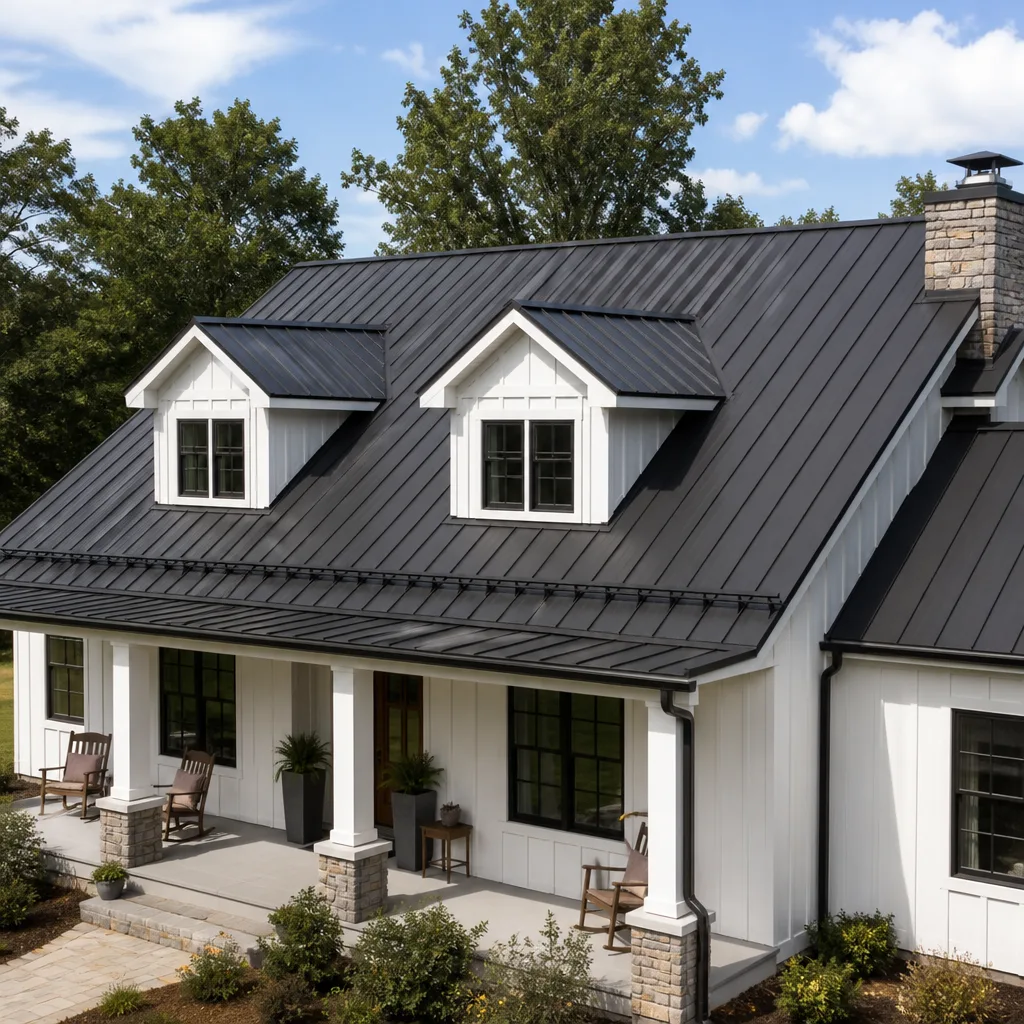 Metal roofing
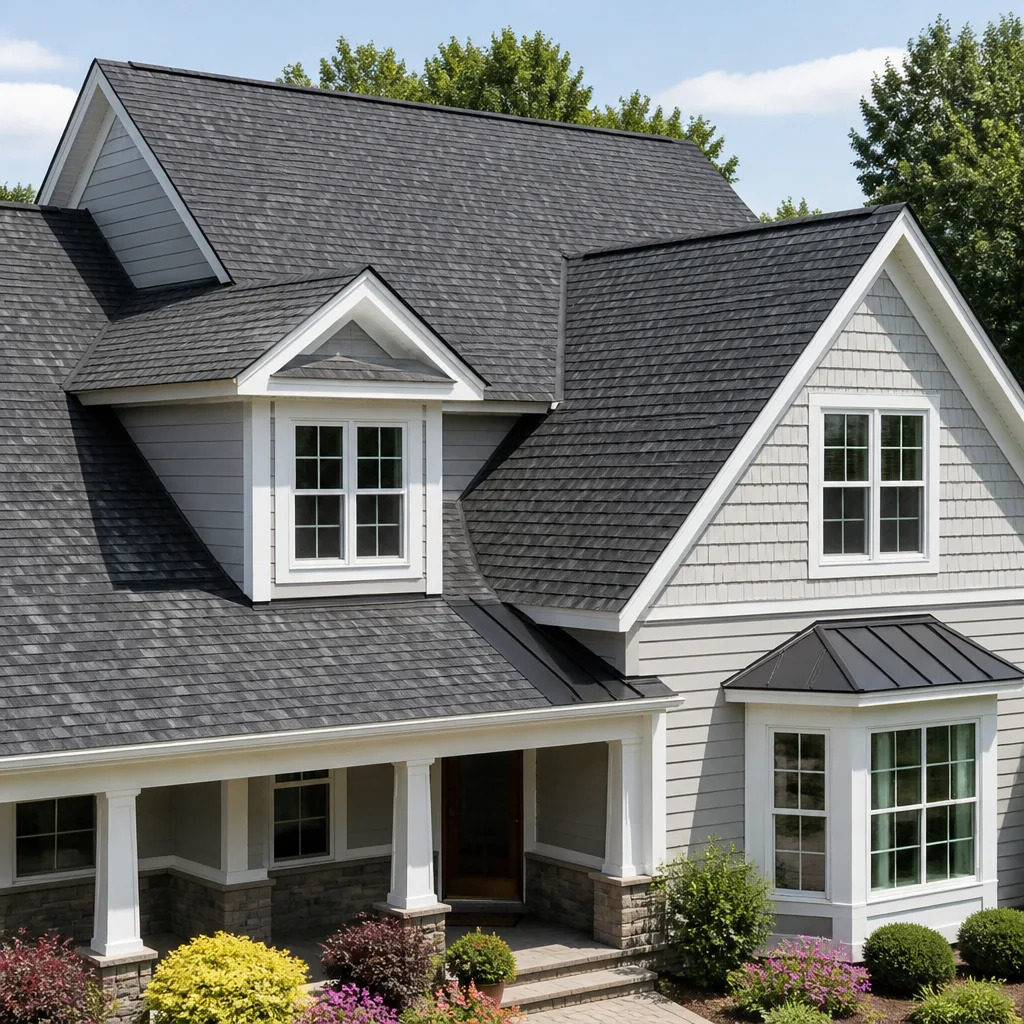 Architectural shingles
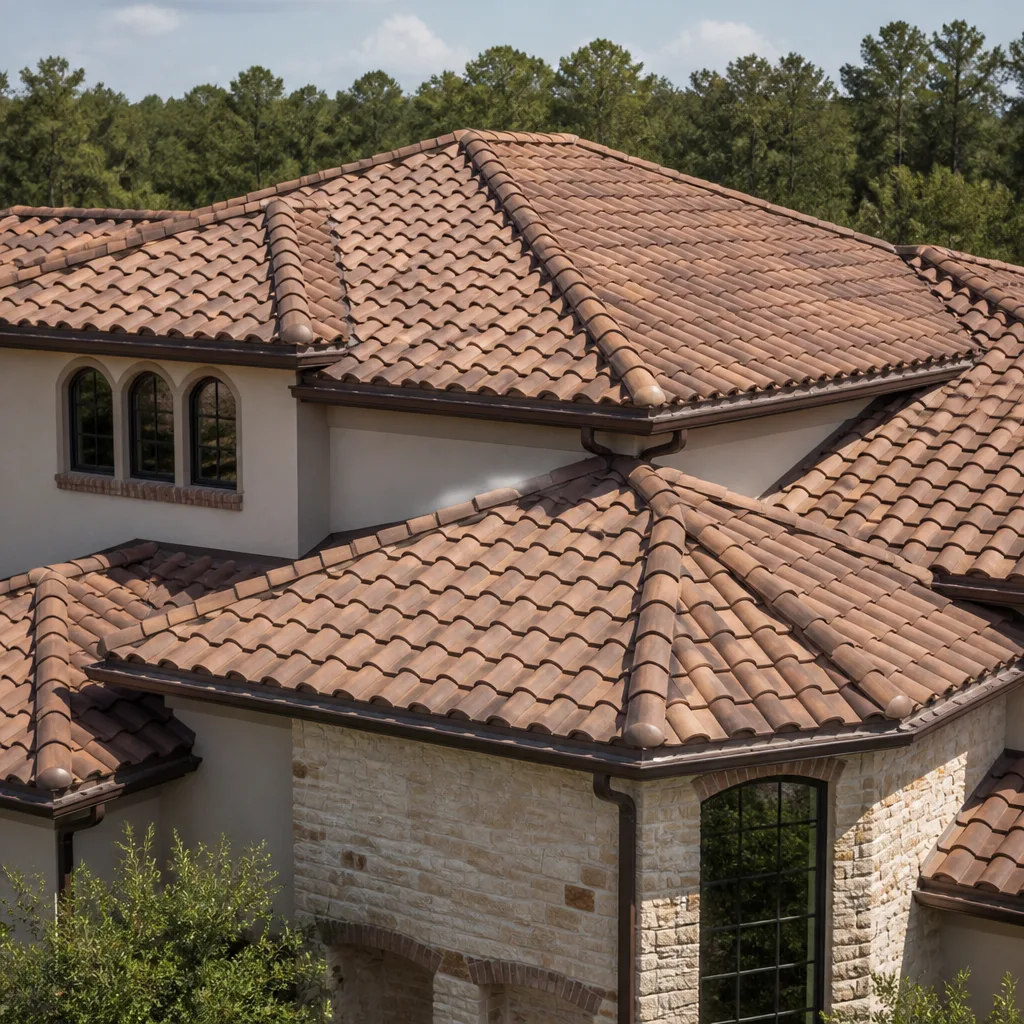 Tile roofing
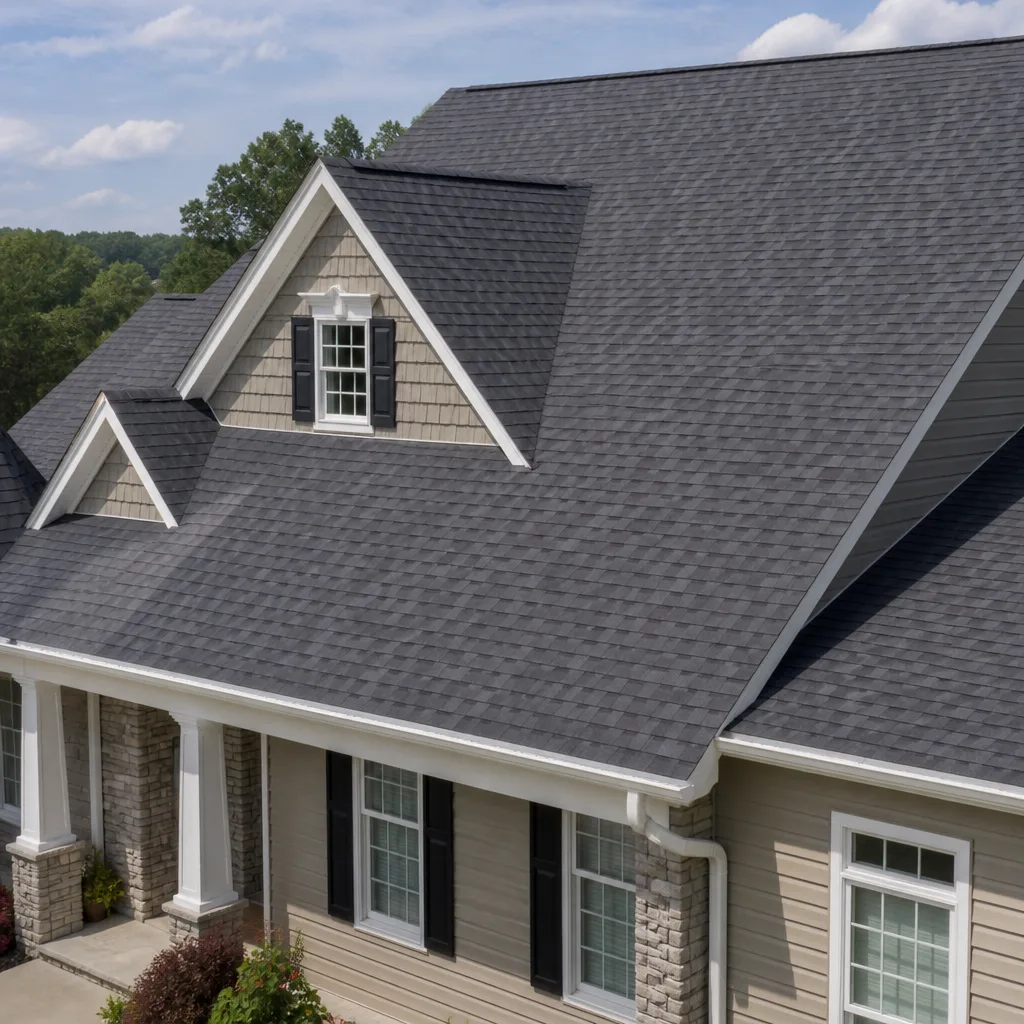 GAF
GAF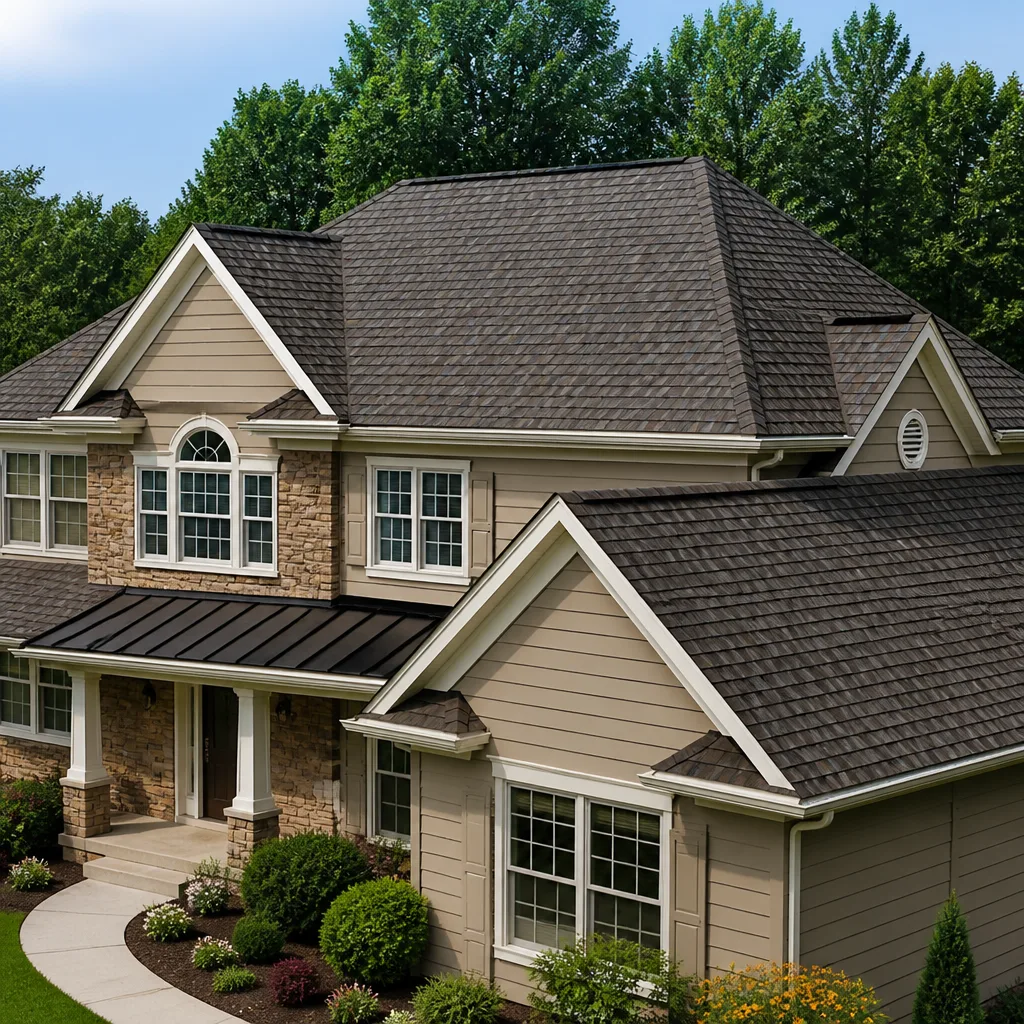 Owens Corning
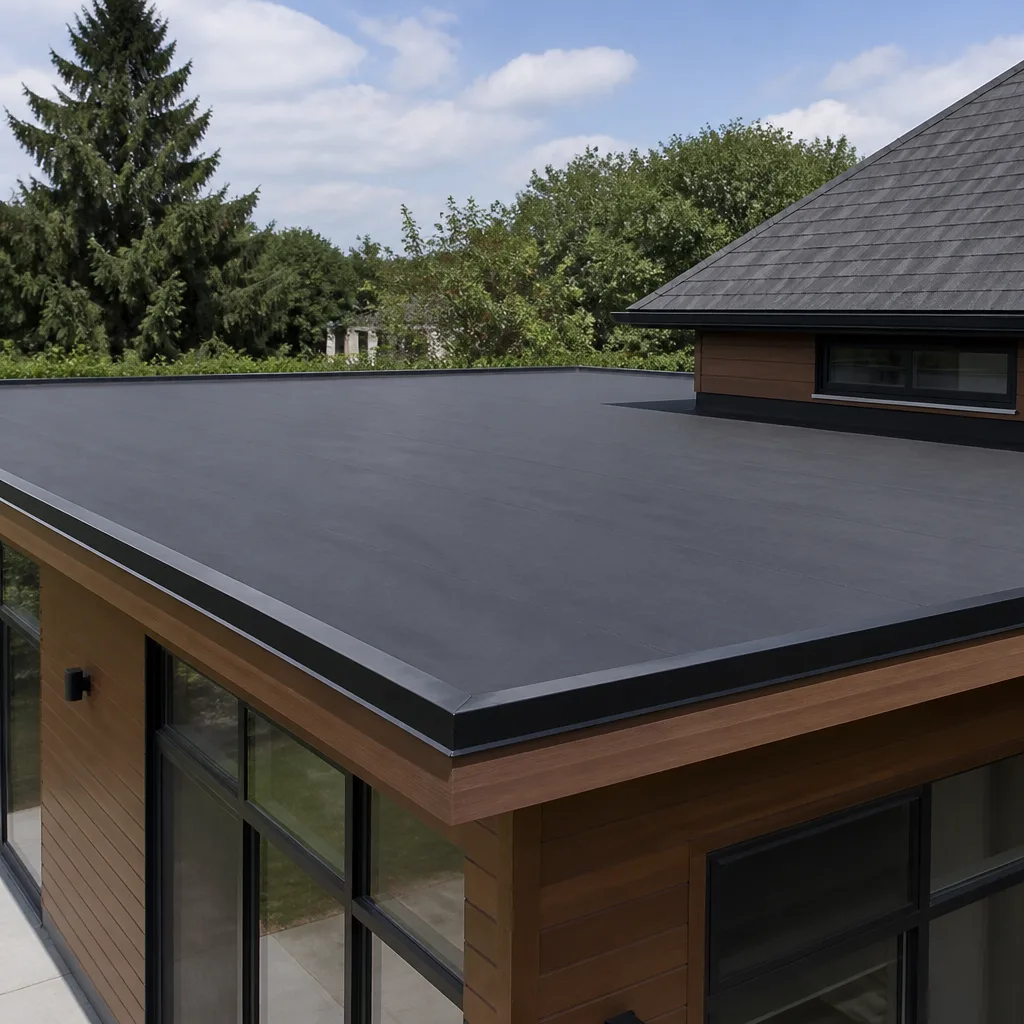 Flat & low-slope
Free roof inspection with deck photos before we talk money - GAF and Owens Corning certified installation
The Complete Guide to Roofing in Dallas
Dallas receives more billion-dollar hail events per decade than any other major U.S. metro, yet most roofing guides read like they were written for a house in Ohio. That matters because Dallas roofs fail in specific, predictable ways tied to our clay soil, our hail patterns, and our 100°F summers. This guide explains what actually happens to roofs in Dallas, what repairs and replacements cost in the DFW market in 2026, and how to make decisions that hold up. We’ll cover hail damage thresholds, why your foundation moves your roof, the truth about reflective shingles, and the three weather windows that stress different parts of your roof at different times of year.
Styles & brands we work with
Quick Answer
Roofing in Dallas means planning for three local realities that don’t appear in generic guides: expansive clay soil that shifts your roofline and causes stress cracking, hail seasons that produce everything from cosmetic pocks to functional structural damage, and summer heat cycles that bake standard shingles until they become brittle. A functional asphalt shingle roof in Dallas typically costs $380 to $550 per square (100 square feet) installed, a full replacement on a 2,000-square-foot roof typically ranges from $11,000 to $17,000, and the most important decision is matching your material choice to Dallas-specific failure patterns rather than price alone.
Table of Contents
- Why Dallas Is Its Own Roofing Environment
- Clay Soil Movement and the Roof Damage Nobody Talks About
- Hail Size Thresholds: Cosmetic vs. Functional Damage in Texas
- Why Standard 3-Tab Shingles Underperform in Dallas Heat
- The Three Dallas Weather Windows and What Each One Stresses
- Real Installed Roofing Costs in Dallas by Material Type (2026)
- How a Dallas Roof Replacement Actually Works: Step by Step
- Common Mistakes to Avoid
- When to Call a Professional
- Frequently Asked Questions
- The Bottom Line
Why Dallas Is Its Own Roofing Environment
Dallas sits on the eastern edge of the Blackland Prairie, a band of soil that runs from the Red River down past Waco. That soil is mostly Houston Black clay, which swells when wet and shrinks when dry. Over a single year, the ground under a Dallas slab foundation can move several inches. That movement travels upward through the frame and into the roofline. In our experience at Brennan Roofing Co Dallas home, we regularly see ridge lines that have shifted, trusses that have pulled slightly at the plates, and valley lines that no longer sit perfectly straight. None of this is visible from the street, but all of it stresses the roof covering.
Add to that the weather pattern. Dallas gets roughly 37 inches of rain a year, but it arrives in concentrated bursts: spring supercell lines, occasional tropical remnants in the fall, and sudden downpours in April and May. Between those bursts, we get long stretches of 95°F-plus heat with full sun exposure. A dark asphalt shingle surface on a 104°F August afternoon can reach 160°F to 170°F. That heat cycle, repeated for a decade, embrittles the asphalt and makes the shingle less able to absorb impact from the next hailstorm. The roof isn’t failing from one cause; it’s failing from a sequence of local conditions that compound each other.
This is why a “complete guide to roofing” written for a national audience misses the point for a Dallas homeowner. The question isn’t just which shingle to buy. The question is which shingle, which underlayment, which fastening schedule, and which ventilation configuration will survive clay soil movement, hail impact, and thermal cycling all at once. We’ll walk through each of those in turn.
Clay Soil Movement and the Roof Damage Nobody Talks About
Here’s a scenario we’ve encountered more than once in Dallas. A homeowner files a wind damage claim after a spring storm. The adjuster comes out and says the shingles look fine. Six months later, the homeowner notices cracks in the ceiling drywall near the ridge and calls us for an inspection. What we find is not wind damage at all; it’s stress cracking from foundation movement. The soil dried out, the slab settled unevenly, and the roofline flexed enough to crack the shingles along the ridge and in the valleys where the roof changes plane.
This failure pattern is unique to North Texas because of our expansive clay. In areas with stable soil, shingles crack from impact or age. In Dallas, they also crack from movement. The ridge shingles are the first to go because the ridge is where two roof planes meet and flex against each other. Valley flashing can also pull away from the decking, leaving gaps that let water in during the next rain event.
What should a homeowner do to address this reality? A few practical steps:
- Inspect the ridge line after a dry spell. A straight ridge that now looks wavy or flattened in spots may indicate truss movement. This is worth a professional look before small cracking becomes a leak.
- Check inside for drywall cracks at ceiling corners. Diagonal cracks near the top of interior walls often correspond to roofline stress. They don’t always mean the roof is leaking, but they indicate movement that will eventually stress the roofing material.
- Choose an underlayment with some give. Synthetic underlayments (such as those from CertainTeed and Owens Corning lines) stretch slightly rather than tearing when the decking shifts. Felt paper, by contrast, cracks and tears under the same movement.
- Use a fastening schedule appropriate for the decking. When the decking moves, nails that are overdriven or placed too close to the shingle edge will pop or tear through. A Dallas roofer who knows the soil conditions will account for this.
This is not a problem you solve by buying the most expensive shingle. It’s a problem you solve by having a roofer who understands that the roof system, not just the shingle, has to work with a moving structure. If you need a professional assessment, our Roof Inspection in Dallas service is a good starting point.
Hail Size Thresholds: Cosmetic vs. Functional Damage in Texas
In Texas, hail damage is assessed using specific size thresholds that insurance adjusters apply consistently. The line between “cosmetic” and “functional” damage is drawn at roughly 1.25 inches in diameter for most asphalt shingle roofs, with the Texas Department of Insurance recognizing 1-inch hail as sufficient to cause damage to some roofing materials and 1.75-inch hail as causing functional damage that compromises the shingle’s ability to perform.
Here’s the practical distinction:
- Hail under 1 inch: Generally causes cosmetic pocks or granule loss that does not shorten the shingle’s functional life. Insurance rarely covers replacement for hail of this size.
- Hail between 1 inch and 1.75 inches: Can cause varying degrees of functional damage. A 1.25-inch stone hitting a brittle 15-year-old shingle may bruise the mat underneath, while a 1.25-inch stone hitting a new impact-resistant shingle may leave only a cosmetic mark. This is where inspection matters most.
- Hail 1.75 inches or larger: Functional damage is presumed for standard shingles. A stone this size carries enough kinetic energy to fracture the asphalt mat, dislodge granules, and compromise the waterproofing layer. Insurance claims for 1.75-inch hail or larger are typically straightforward.
What does “functional damage” actually mean? It means the shingle can no longer do its job over its full expected lifespan. The granule loss exposes the asphalt to UV degradation. The fractured mat allows water to reach the decking. The shingle may not leak today, but it will fail earlier than it should. Functional damage is the standard that justifies replacement.
After any hail event in Dallas, the right move is an inspection by someone who knows the threshold standards, not a glance from the ground. A roof can look fine from the curb and have widespread bruising visible only from the surface level. If you’re uncertain, schedule a roof inspection in Dallas and ask specifically about hail damage thresholds before calling your insurer.
Why Standard 3-Tab Shingles Underperform in Dallas Heat
The 3-tab shingle was once the most common roofing material in North Texas. It’s still installed on budget builds and some rental properties. But in Dallas, the 3-tab is a weak choice for a simple reason: the shingle is built with a single layer of asphalt and a mat that’s thinner than architectural shingles, and Dallas summers subject that thin material to more thermal stress than almost any other large city in the country.
A 3-tab shingle in Dallas will often show granule loss and curling within 8 to 12 years, compared to 15 to 20 years in cooler climates. The UV exposure is higher, the surface temperature peaks are higher, and the daily thermal expansion range (cool morning to hot afternoon) is wider. That repeated expansion and contraction fatigues the single-layer mat faster than the laminated architectural shingle, which has two layers bonded together and a thicker, more UV-resistant mat.
Impact-rated alternatives cost more but they address the specific Dallas failure patterns. Here are the real installed price ranges for a Dallas homeowner in 2026, based on current DFW labor and material costs for a typical 2,000-square-foot roof:
- Standard architectural shingle (Class 1 or no impact rating): $4.50 to $5.75 per square foot installed. Materials from IKO, Atlas, and the entry-level CertainTeed lines fall in this range.
- Impact-rated architectural shingle (Class 3, such as certain Owens Corning and Atlas lines): $5.25 to $6.75 per square foot installed. These carry a reinforced mat that resists hail impact up to roughly 1.75 inches.
- Class 4 impact-rated shingle (highest impact rating, available from CertainTeed, Owens Corning, and IKO): $5.75 to $7.50 per square foot installed. Many Dallas insurers offer premium discounts for a full Class 4 roof, sometimes 15% to 30% off the wind and hail portion of the premium.
The Class 4 upgrade often pays for itself through insurance discounts alone over 5 to 8 years, especially in hail-prone ZIP codes. But the more important benefit is that a Class 4 shingle simply survives Dallas hail better. We recommend it for almost every full replacement we do in Dallas because the math works out for the homeowner over the roof’s life.
The Three Dallas Weather Windows and What Each One Stresses
Dallas roofing problems are seasonal. Different components fail at different times of year, and knowing which window you’re in helps you diagnose what you’re seeing.
Spring Storm Season (March through June)
This is hail season. The National Weather Service records the majority of Dallas-Fort Worth severe hail events between March and June, peaking in April and May. During this window, the primary stressors are impact damage from hail and wind-driven rain. Flashing around chimneys, vent pipes, and skylights takes the hardest hit because wind drives rain sideways into those seams. If you hear hail hitting the roof, the right move is to schedule an inspection within a few weeks, not a few months. Granule loss and bruising become harder to document after the first heavy rain, and waiting can complicate a claim.
July – August Heat Peak
The summer stress is thermal. Shingle surface temperatures in July and August regularly exceed 150°F. Roof decking in poorly ventilated attics can reach 140°F, which is hot enough to cook the adhesives that hold the shingle layers together. If you notice the shingles on the west-facing roof slope are curling while the north-facing slope looks fine, that’s thermal damage, not age. Attic ventilation (ridge vents, soffit vents, or a powered vent) becomes the deciding factor for how long a roof lasts through Dallas summers. A poorly ventilated attic can shorten a shingle’s life by 5 to 7 years.
November Freeze
Dallas freezes are brief but they come with a specific problem: freeze-thaw cycling. Water that has settled in small cracks, nail holes, or along flashing joints freezes and expands. When it thaws, the crack is slightly larger than before. After several freeze-thaw cycles in a single winter, a small gap can become a visible separation. The November freeze is also when we see the most storm collar failures around vent pipes. The aluminum collar contracts in the cold, the sealant fails, and the next rain finds its way inside. An annual inspection before the first freeze is the cheapest way to catch this.
Real Installed Roofing Costs in Dallas by Material Type (2026)
Dallas roofing prices in 2026 have stabilized after the post-2021 materials spike, but they remain higher than pre-2020 levels because DFW labor rates have risen and manufacturers have kept shingle pricing elevated. These are installed price ranges for a typical suburban Dallas roof of 2,000 to 2,500 square feet, including tear-off of the old roof, new underlayment, new flashing, and standard ridge cap:
| Roofing Type | Installed Cost per Square Foot | Typical Full Roof Cost (2,000 sq ft) | Lifespan in Dallas Conditions |
|---|---|---|---|
| 3-Tab Asphalt | $3.75 – $4.50 | $7,500 – $9,000 | 10 – 13 years |
| Architectural Asphalt (non-impact) | $4.50 – $5.75 | $9,000 – $11,500 | 15 – 20 years |
| Class 3 Impact-Rated Architectural | $5.25 – $6.75 | $10,500 – $13,500 | 18 – 22 years |
| Class 4 Impact-Rated Architectural | $5.75 – $7.50 | $11,500 – $15,000 | 20 – 25 years |
| Metal Roofing (standing seam, 26-gauge) | $9.00 – $13.00 | $18,000 – $26,000 | 30 – 50 years |
| Tile (concrete or clay, including decking reinforcement) | $10.00 – $16.00 | $20,000 – $32,000 | 40 – 60 years |
These ranges assume a straightforward roof with standard pitch and no major decking replacement. If your roof needs significant decking replacement (because the old decking is water-damaged or does not meet current code), expect to add $1.50 to $3.00 per square foot for the affected areas. If you have a steep pitch (8/12 or higher), multiple valleys, or roof features like dormers and skylights, the labor rate rises accordingly.
For most Dallas homeowners, the value sweet spot is a Class 4 impact-rated architectural shingle from a manufacturer line such as CertainTeed, Owens Corning, or IKO. The material cost premium over a standard architectural shingle is modest, the insurance discount is real, and the hail survival advantage is measurable in a city that gets hit as often as Dallas does.
How a Dallas Roof Replacement Actually Works: Step by Step
If you’ve never replaced a roof in Dallas, the process may seem opaque. It isn’t, as long as you know what to expect. Here’s the sequence, in order:
- Inspection and measurement. A roofer measures every roof plane, documents existing damage, checks attic ventilation, and notes any decking that may need replacement. This step should not cost anything. We perform this as part of our free estimate at Roofing Company in Dallas.
- Written estimate. The price goes on paper before any work starts. At Brennan Roofing Co Dallas, this is non-negotiable: the written estimate includes the full scope of work, the specific materials and manufacturer lines, the tear-off and haul-away, the underlayment, and the flashing. You should not accept a “we’ll see when we get up there” price from any roofer.
- Material selection and color confirmation. You choose your shingle line, color, and any upgrades (Class 4 rating, better underlayment, upgraded ridge ventilation). The roofer orders the material and confirms the delivery date.
- Tear-off. The old shingles, felt, and flashing come off. The crew exposes the decking and evaluates it. If decking needs replacement, a good Dallas roofer will have included a per-square-foot allowance in the written estimate so the additional cost is predictable, not a surprise.
- Decking and underlayment installation. New decking goes down where needed, then the underlayment (synthetic or felt), drip edge, and ice-and-water barrier in valleys and at eaves. This is the layer that protects your home if the shingles fail.
- Shingle installation and flashing. The shingles are nailed, the flashing is installed at every penetration (chimneys, vents, pipes, skylights), and the ridge cap is applied. The nail pattern and fastening method should be verified by the crew lead before they move to the next section.
- Cleanup and nail sweep. A magnetic sweep of the yard and driveway is standard on any professional job. The crew should walk the property with you before they leave.
- Final inspection and written guarantee. You receive the written guarantee, and the roofer should give you the manufacturer’s warranty documentation. At Brennan Roofing Co Dallas, every job also includes the 365-Day Done Right Promise: if it’s not done right, we make it right, in writing, at no charge for a full year.
If a Dallas roofer skips step 2, the written estimate, that’s your signal to move to someone else. The written price is the entire basis for accountability.
Common Mistakes to Avoid
- Filing an insurance claim before getting an inspection. If the damage doesn’t meet the functional threshold, the claim may be denied and the denial goes on your record, which can affect future premiums. Get an inspection first, then decide whether to file.
- Choosing a lower-cost shingle to save money on a Dallas roof. A 3-tab or non-impact shingle in Dallas costs less upfront, but you’ll replace it 5 to 8 years sooner and your insurance premium won’t drop. The lifecycle math favors Class 4.
- Ignoring attic ventilation. A new roof on a poorly ventilated attic is a roof that’s already failing. Ventilation is a roof component, not an optional extra, in Dallas heat.
- Not getting a written estimate that breaks down decking replacement. If the estimate doesn’t specify what decking replacement costs per square foot, you’re exposing yourself to a mid-job surprise. Get the number on paper before the tear-off starts.
- Waiting until after the first freeze to inspect flashing. By the time you see the interior water stain, the damage has been developing for months. A November inspection is cheap compared to a water damage repair.
- Assuming hail damage is always visible from the ground. Most functional hail damage is invisible unless you’re on the roof surface. Get a professional inspection after any hail event producing stones over 1 inch.
- Choosing a roofer based on the lowest bid in Dallas. The lowest bid is often the roofer who skips the underlayment upgrade, underpays the crew, or doesn’t carry proper insurance. The price you’re really paying is the cost of the next repair.
When to Call a Professional
Call a professional Dallas roofer when you see water stains on interior ceilings, curling or missing shingles after a storm, granule buildup in the gutters, or daylight visible through the attic roof deck. Also call after any hailstorm that produced stones over 1 inch, even if the roof looks fine from the ground. If your ridge line looks wavy or the shingles along a valley are separating, that may be soil movement stress, and it’s worth a professional who understands the Dallas soil dynamic. If you’d like a second opinion, call Brennan Roofing Co Dallas for roof repair in Dallas and we’ll tell you exactly what we find. Brennan Roofing Co Dallas offers free estimates in Dallas. Call (903) 499-4441.
Frequently Asked Questions
A full roof replacement in Dallas typically costs between $9,000 and $17,000 for a 2,000-square-foot home, depending on material type. A Class 4 impact-rated architectural shingle roof (the best value for Dallas hail conditions) runs roughly $11,500 to $15,000 on the same footprint. Get a written estimate at (903) 499-4441 so you have your exact number on paper before any work starts.
A roof lasts 10 to 25 years in Dallas depending on the material: 3-tab asphalt lasts 10 to 13 years, architectural shingles last 15 to 20 years, and Class 4 impact-rated shingles last 20 to 25 years. Dallas shortens lifespan versus cooler climates because of UV exposure, thermal cycling, and hail impact. Proper attic ventilation can add 5 or more years to any shingle roof.
Most standard Texas homeowners policies cover functional hail damage, which in practice means hail of 1.75 inches or larger, or smaller hail that demonstrably compromised the shingle’s waterproofing. Policies do not cover cosmetic pocking that does not affect function. Before filing, get an inspection and document the damage. If the claim is approved, your deductible typically applies. For questions about a specific roof, call (903) 499-4441.
A Class 4 impact-rated architectural shingle from a manufacturer line such as CertainTeed, Owens Corning, or IKO is the best value for Dallas conditions. It resists hail penetration better than standard shingles, holds up to Dallas UV exposure, and often qualifies for an insurance premium discount. Metal is more expensive but lasts longer. The right choice depends on your budget and how long you plan to stay in the home.
In many Dallas neighborhoods, a newer roof is a selling point that helps you clear inspection hurdles and justify your asking price. If your roof is over 15 years old or has visible hail damage, replacing it before listing often pays for itself in faster sale time and stronger offers. If you’re on the fence, a roof inspection will tell you what a buyer’s inspector will find, and then you can decide with facts rather than guesswork.
A roof replacement is not a DIY project. It requires labor on a sloped surface, sometimes in temperatures over 100°F, with tools that can cause serious injury if mishandled. The more important issue is that a DIY roof in Dallas has no manufacturer warranty (most shingle manufacturers void warranty on non-professional installations) and no insurance coverage for errors. Hire a trained, insured professional and get the guarantee in writing.
The Bottom Line
Roofing in Dallas is a local engineering problem, not a generic home improvement. Your roof has to survive clay soil movement that flexes the roofline, hail that fractures shingle mats, and summer heat that bakes the materials to 160°F. The solution is a material choice and an installation approach that account for all three. Choose a Class 4 impact-rated shingle, verify your attic ventilation, get everything in writing before work starts, and use a roofer who knows the Dallas failure patterns. At Brennan Roofing Co Dallas, we put the price on paper before any work begins, we install materials from CertainTeed, Owens Corning, IKO, and Atlas, and every job is backed by the 365-Day Done Right Promise in writing. Call (903) 499-4441 to schedule your free estimate.
Written by Travis Oakley, Owner at Brennan Roofing Co Dallas, serving Dallas since 2000.
See the difference
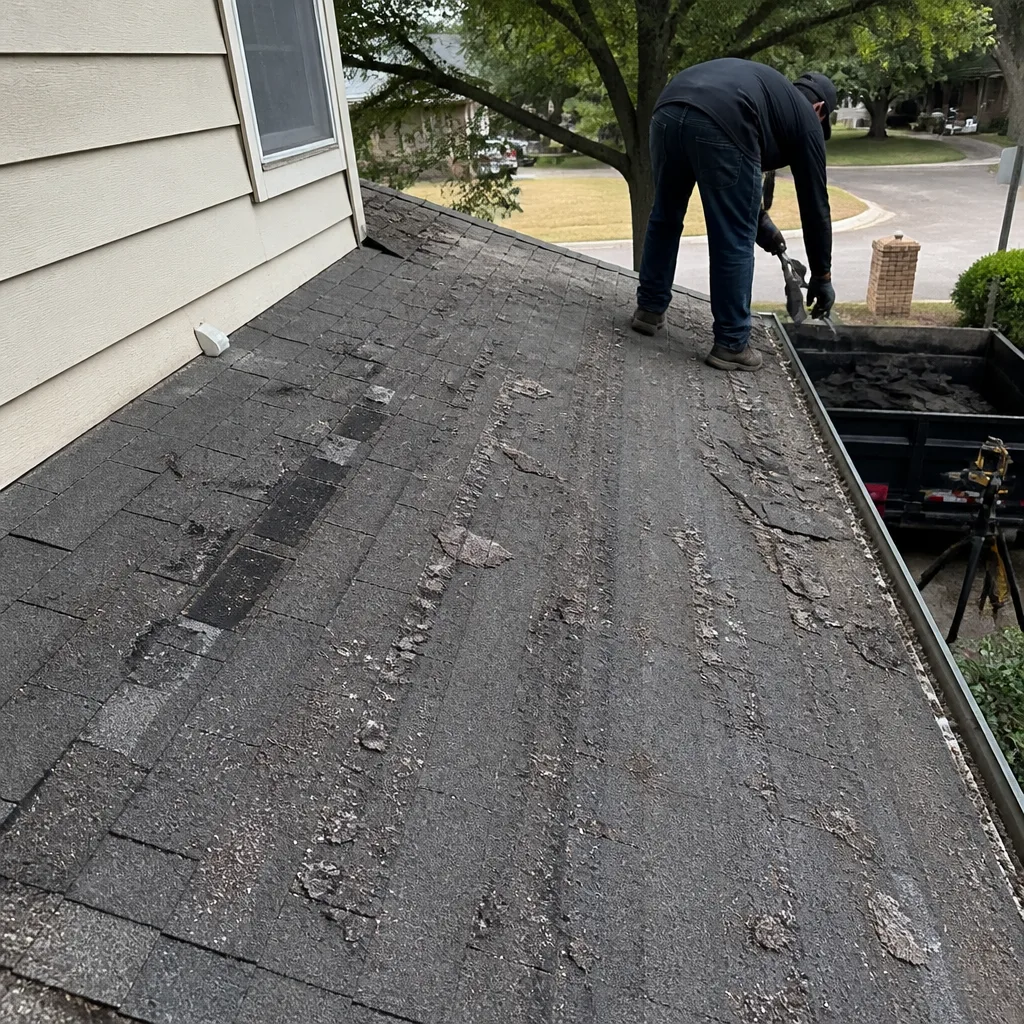 Before
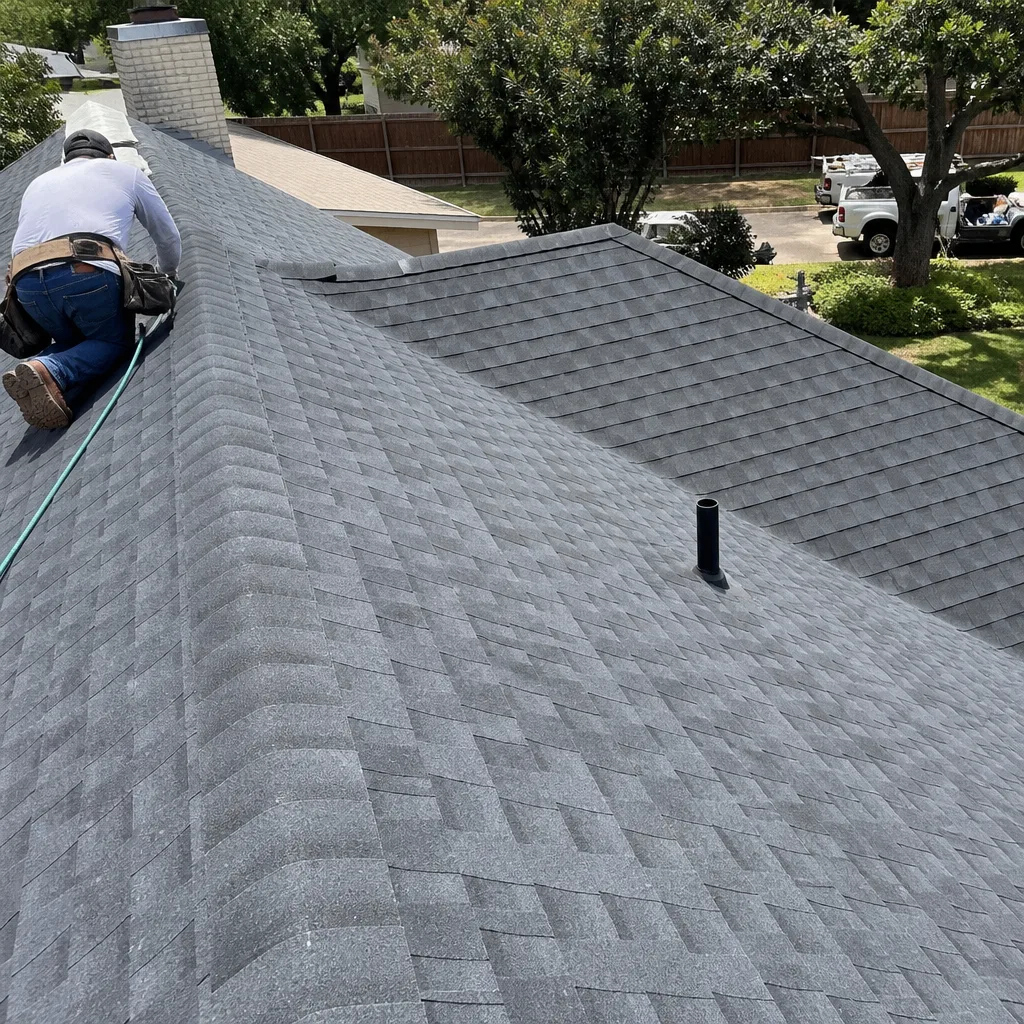 After
After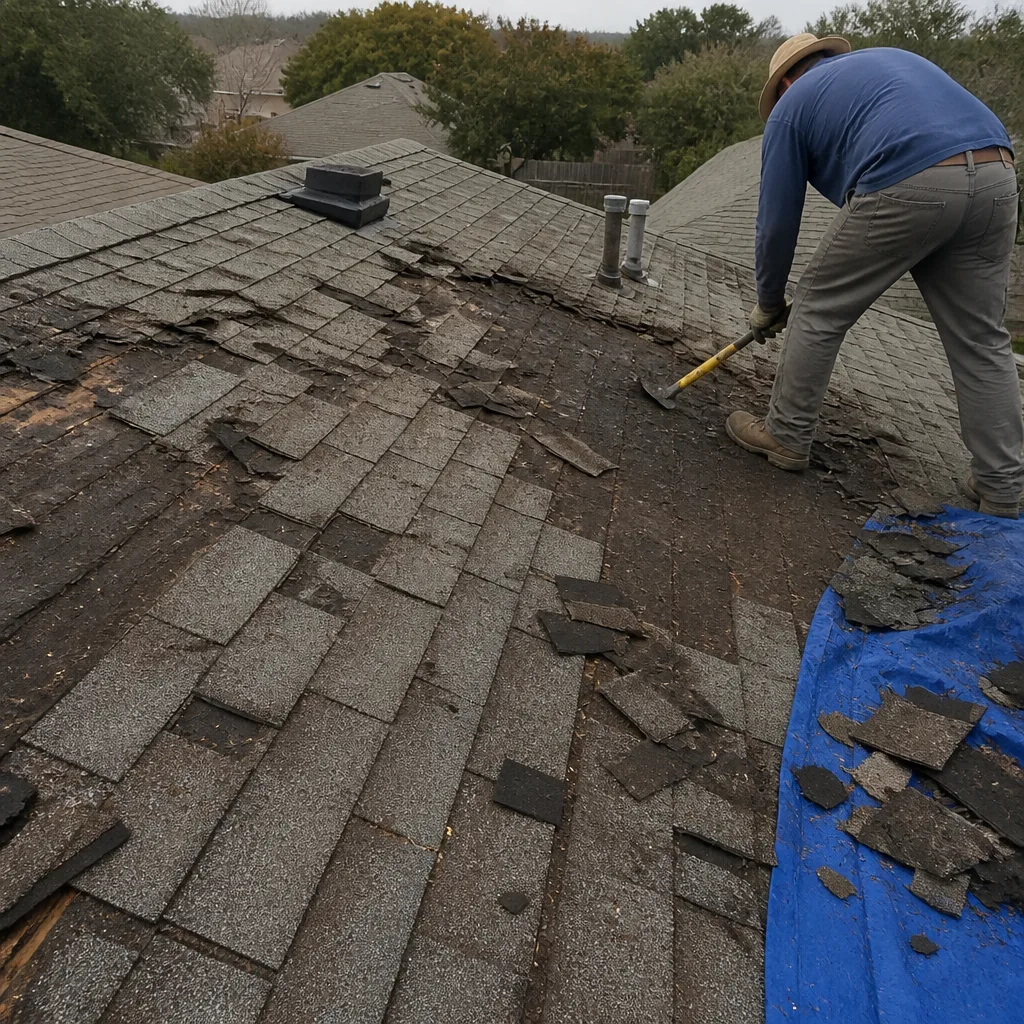 Before
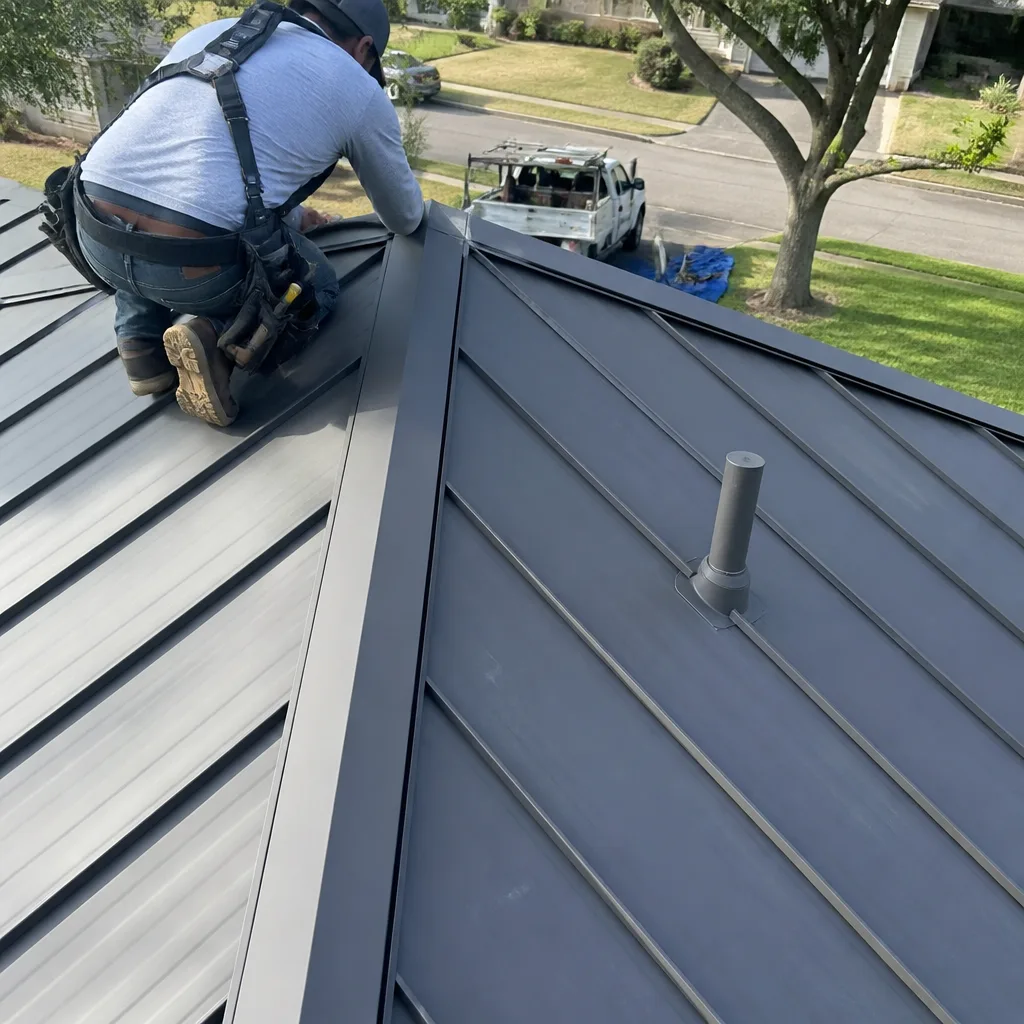 After
After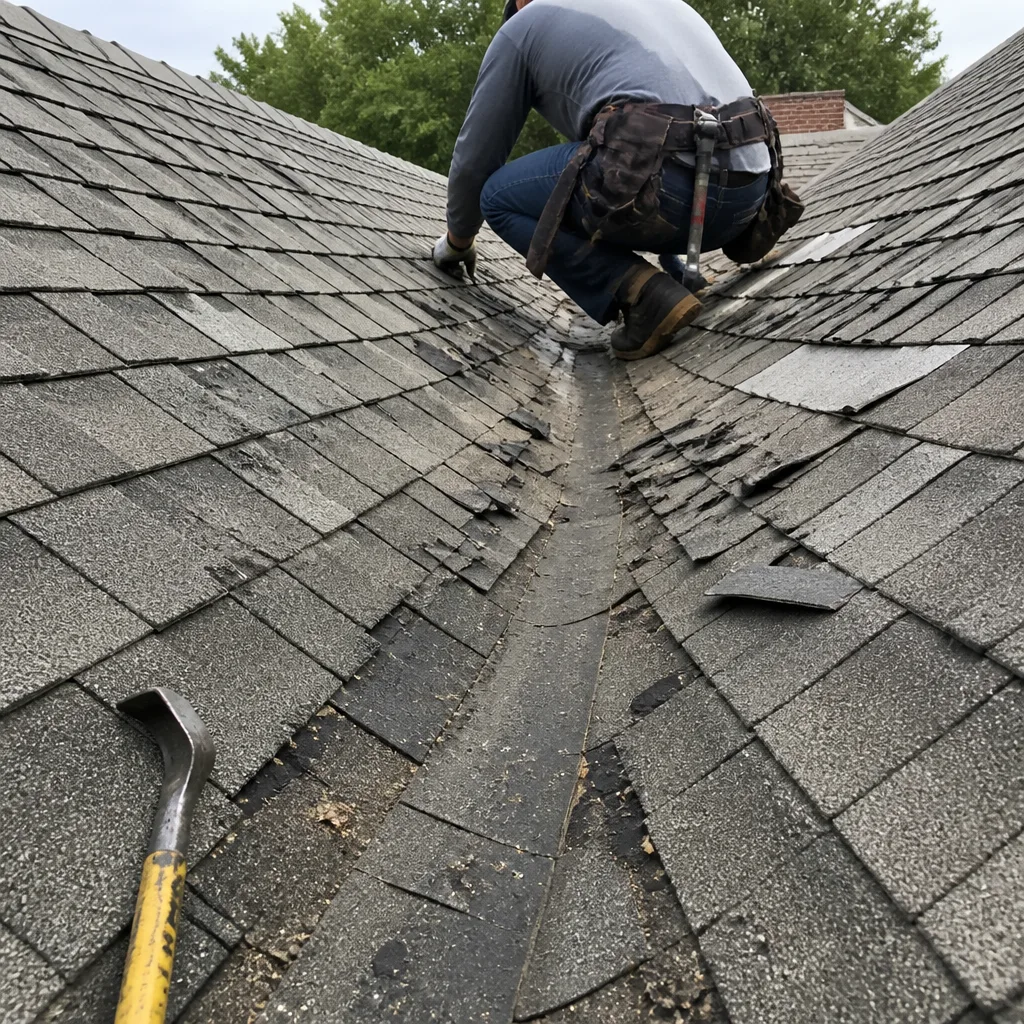 Before
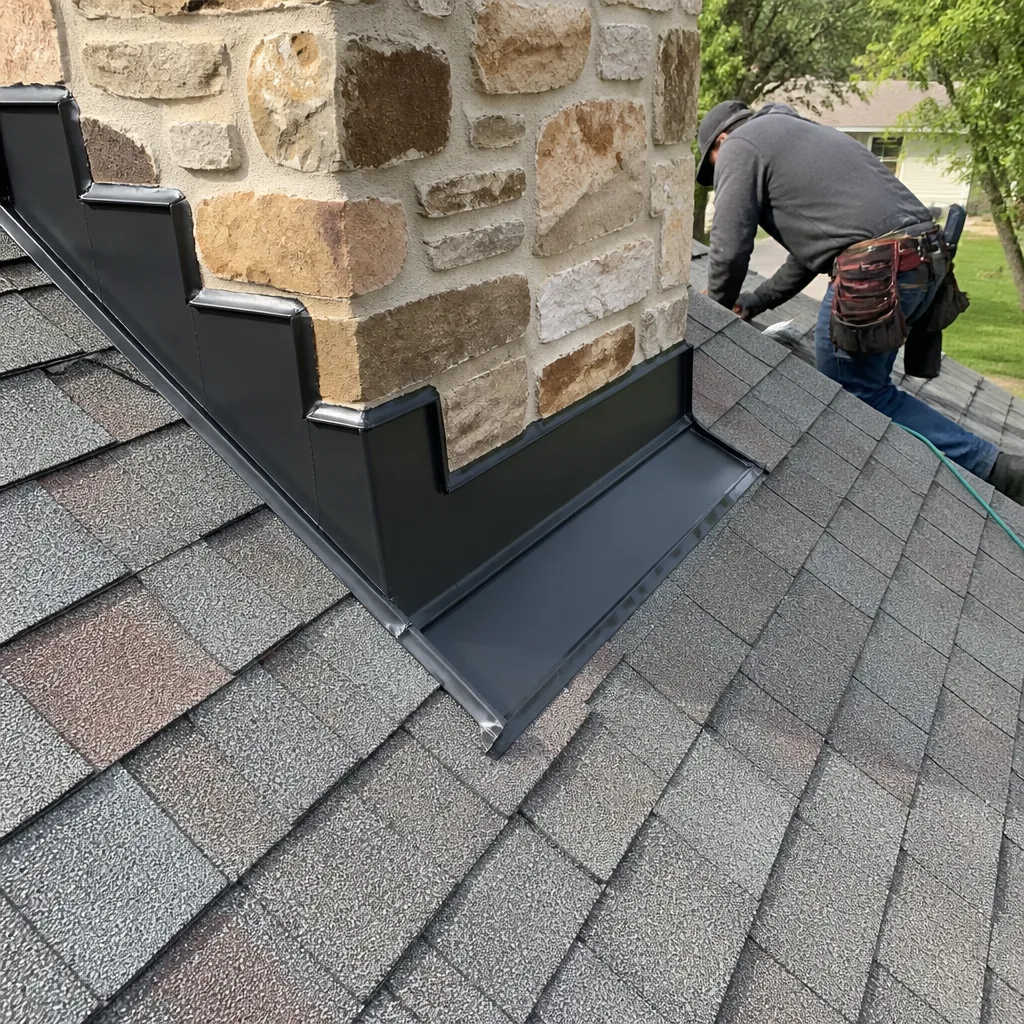 After
After