
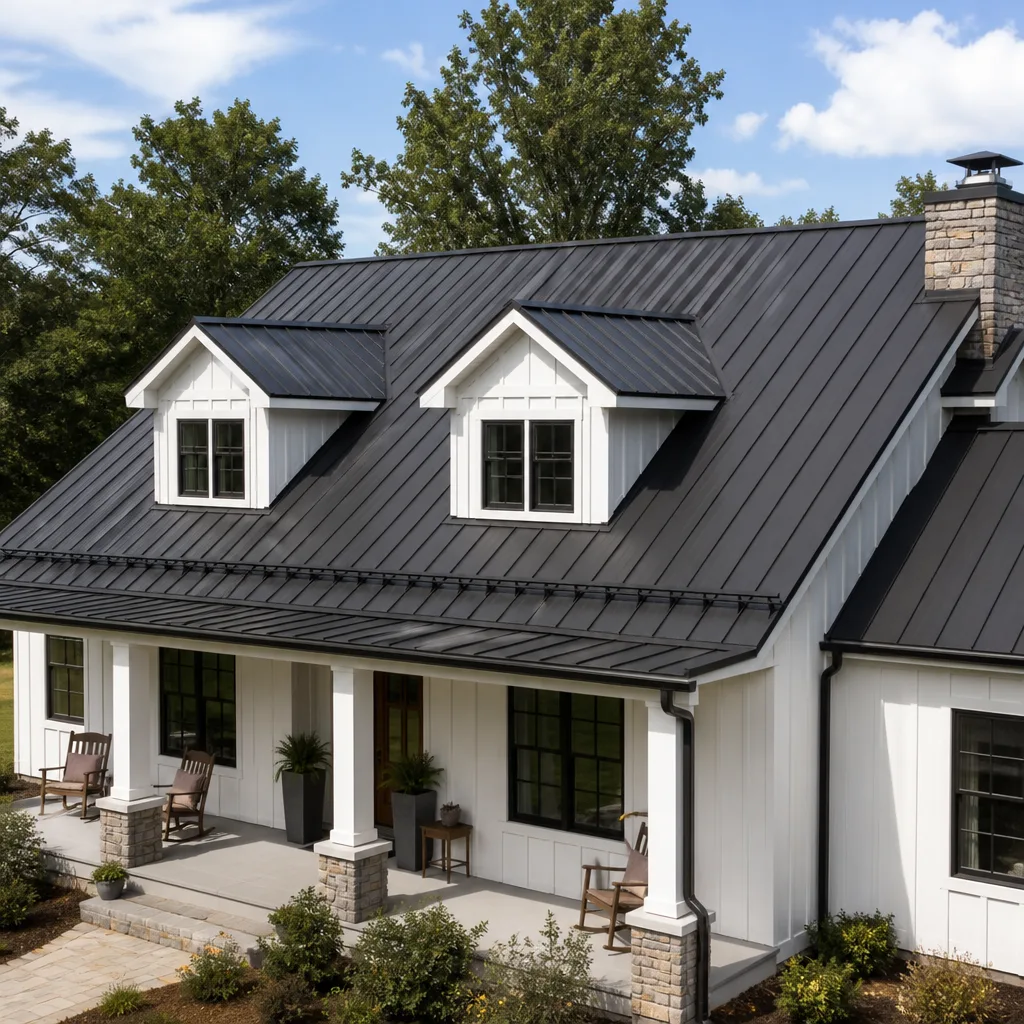
 Metal roofing
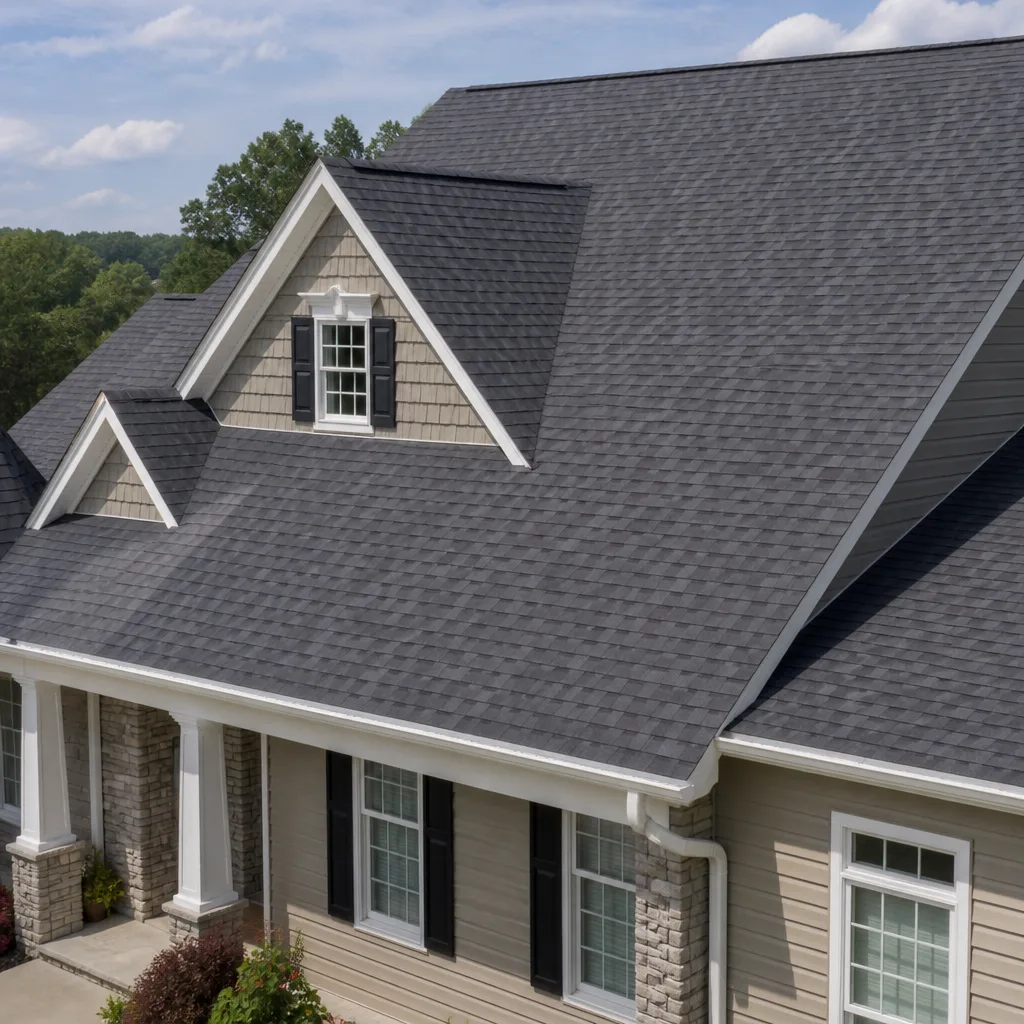
 Architectural shingles
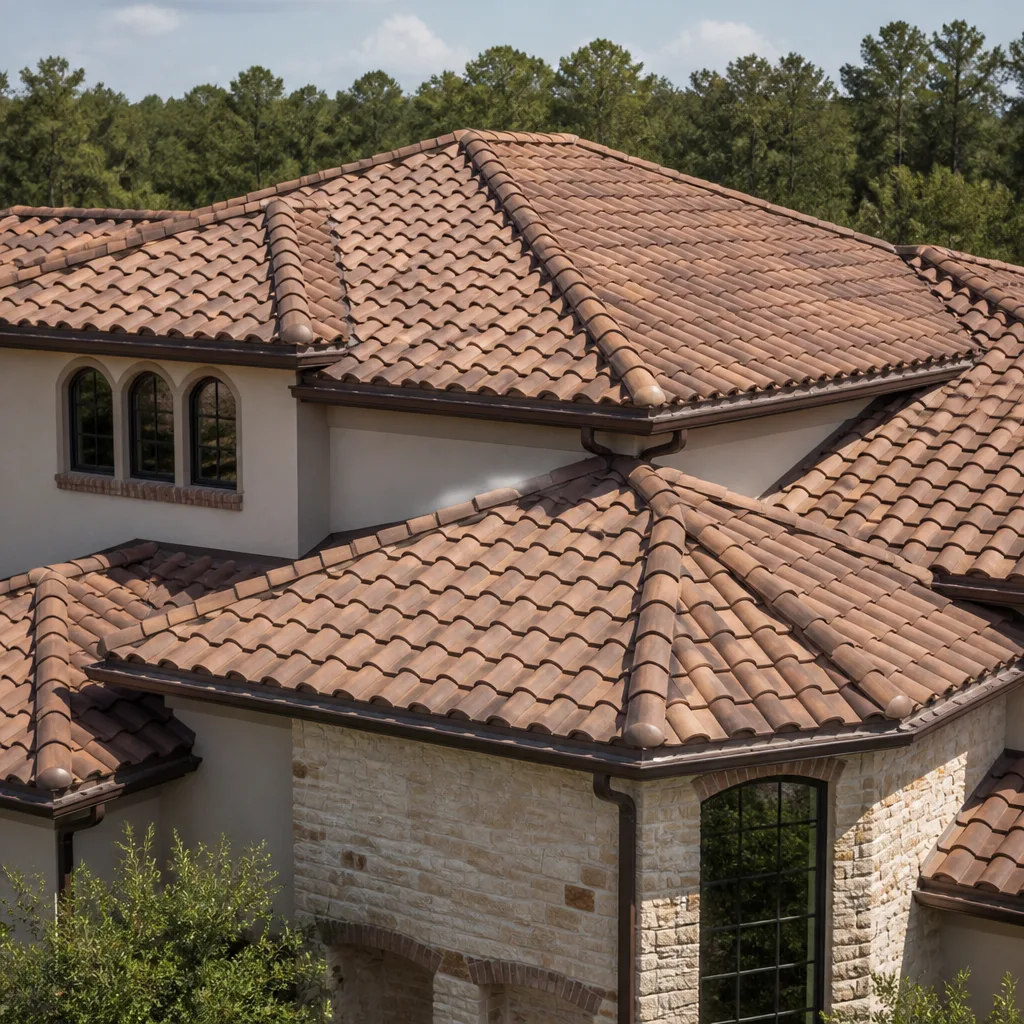 Tile roofing
 GAF
GAF Owens Corning
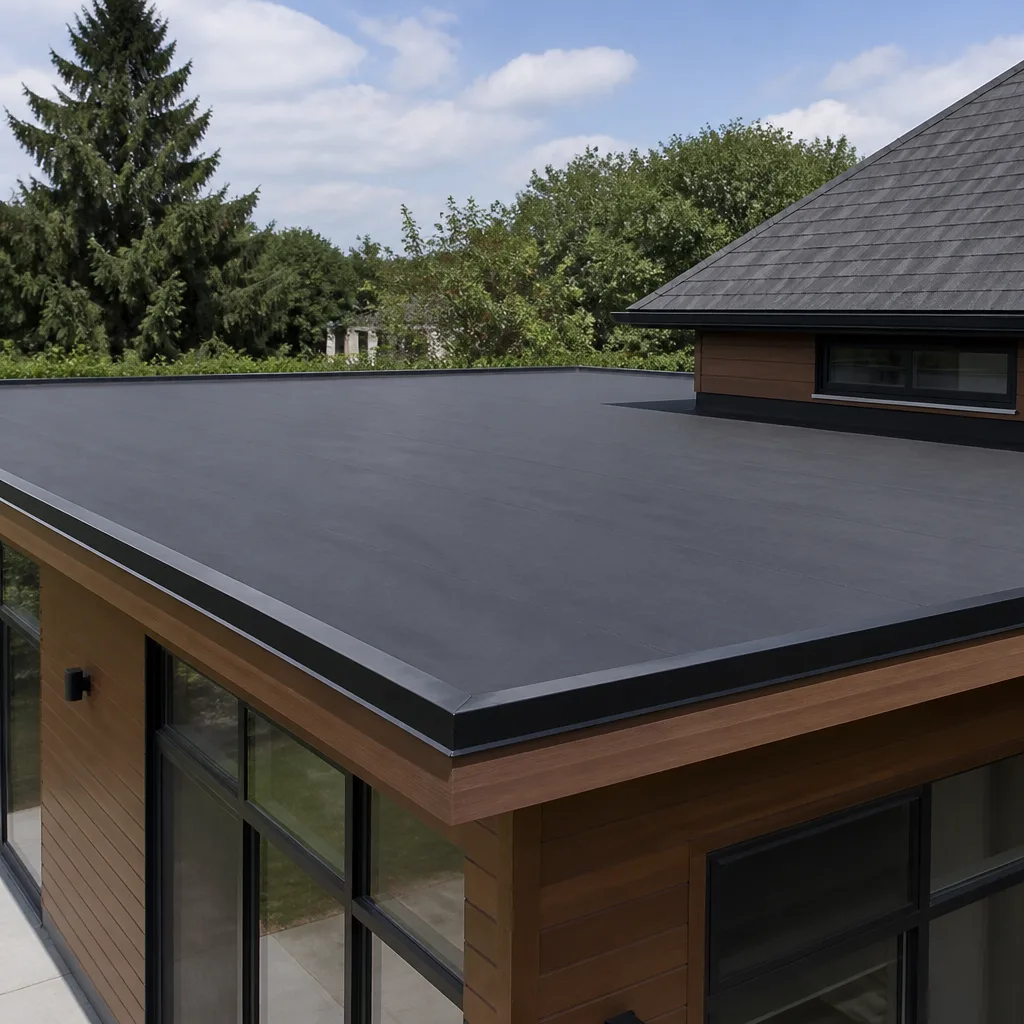 Flat & low-slope
Free roof inspection with deck photos before we talk money - GAF and Owens Corning certified installation
Styles & brands we work with
See the difference
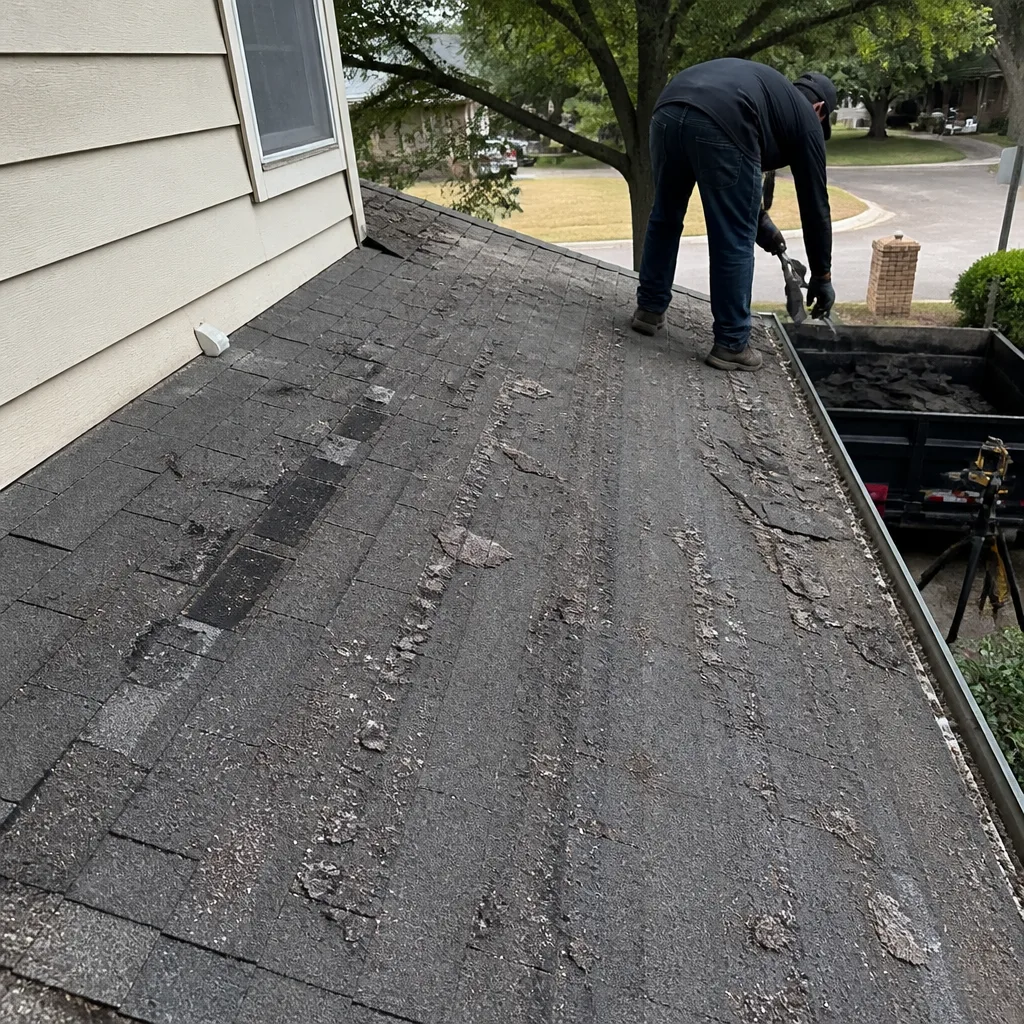 Before
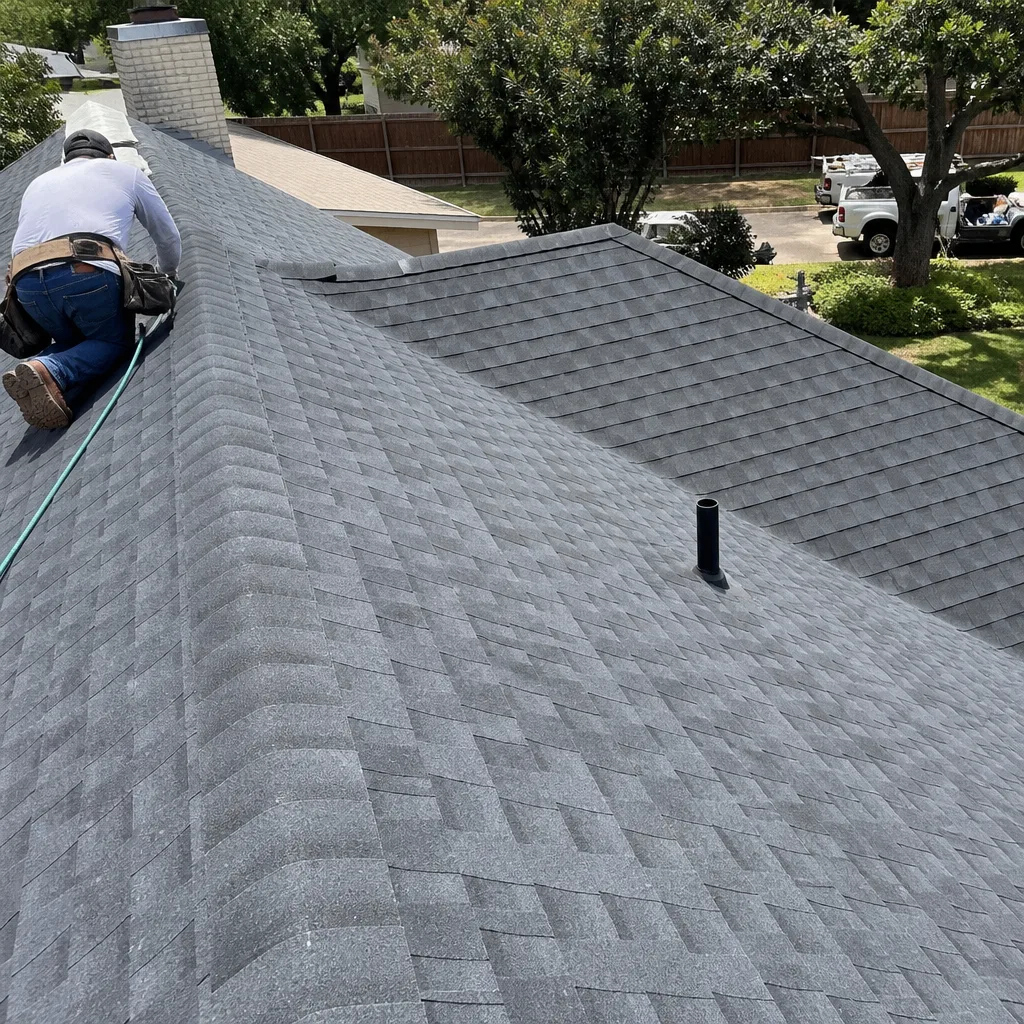 After
After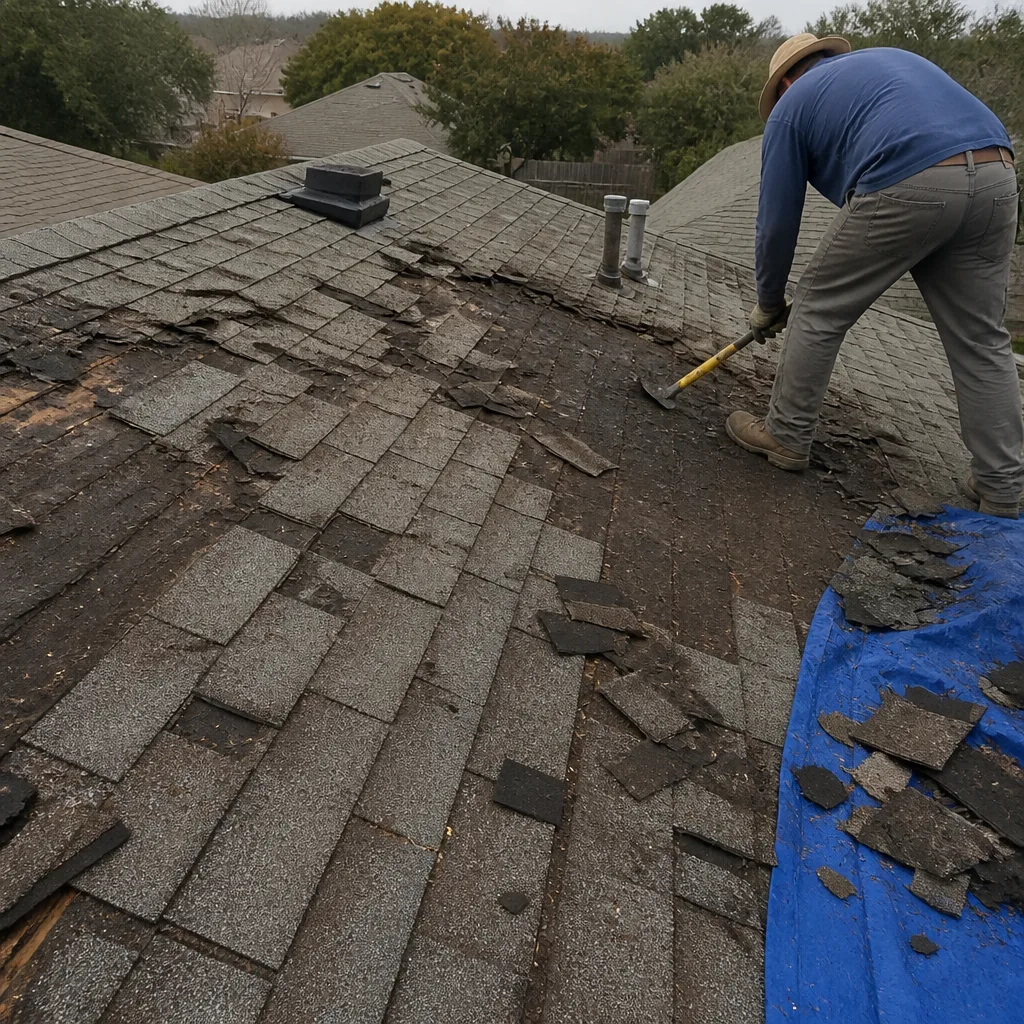 Before
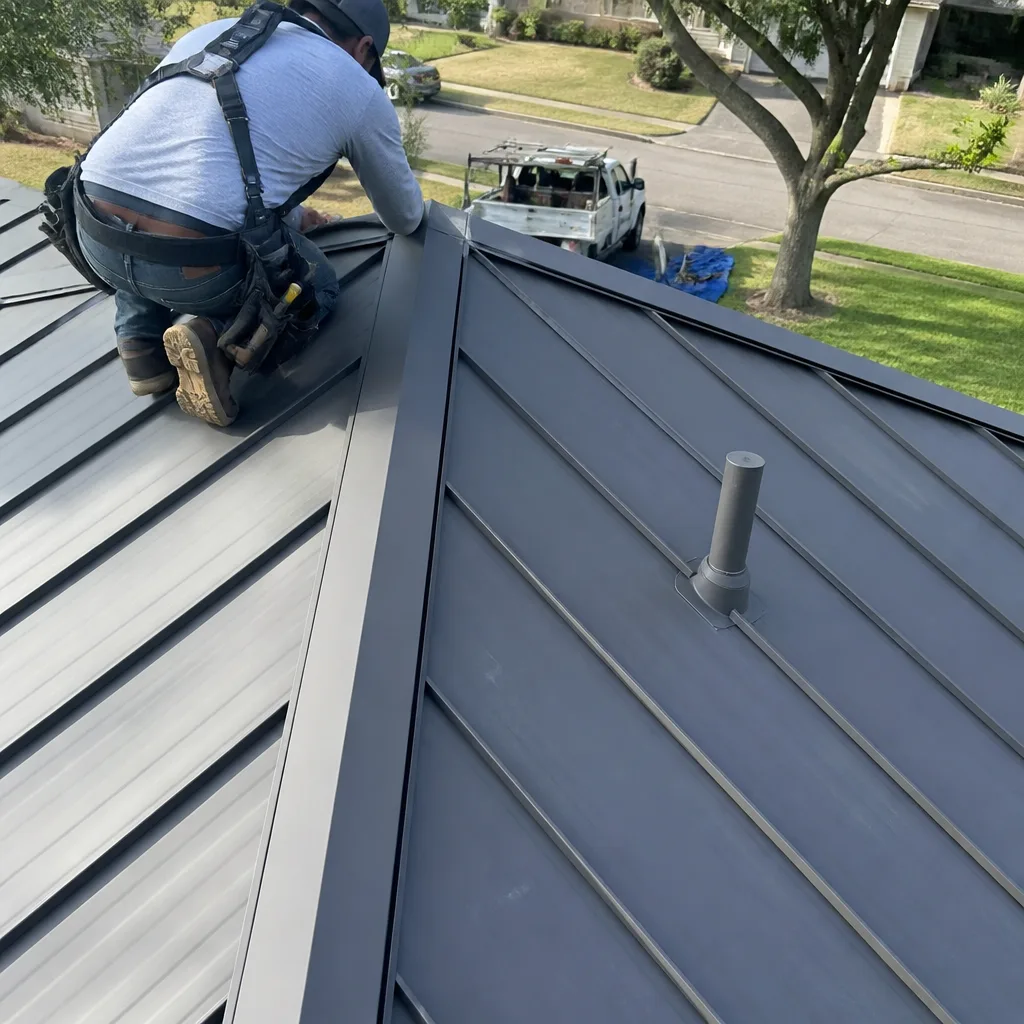 After
After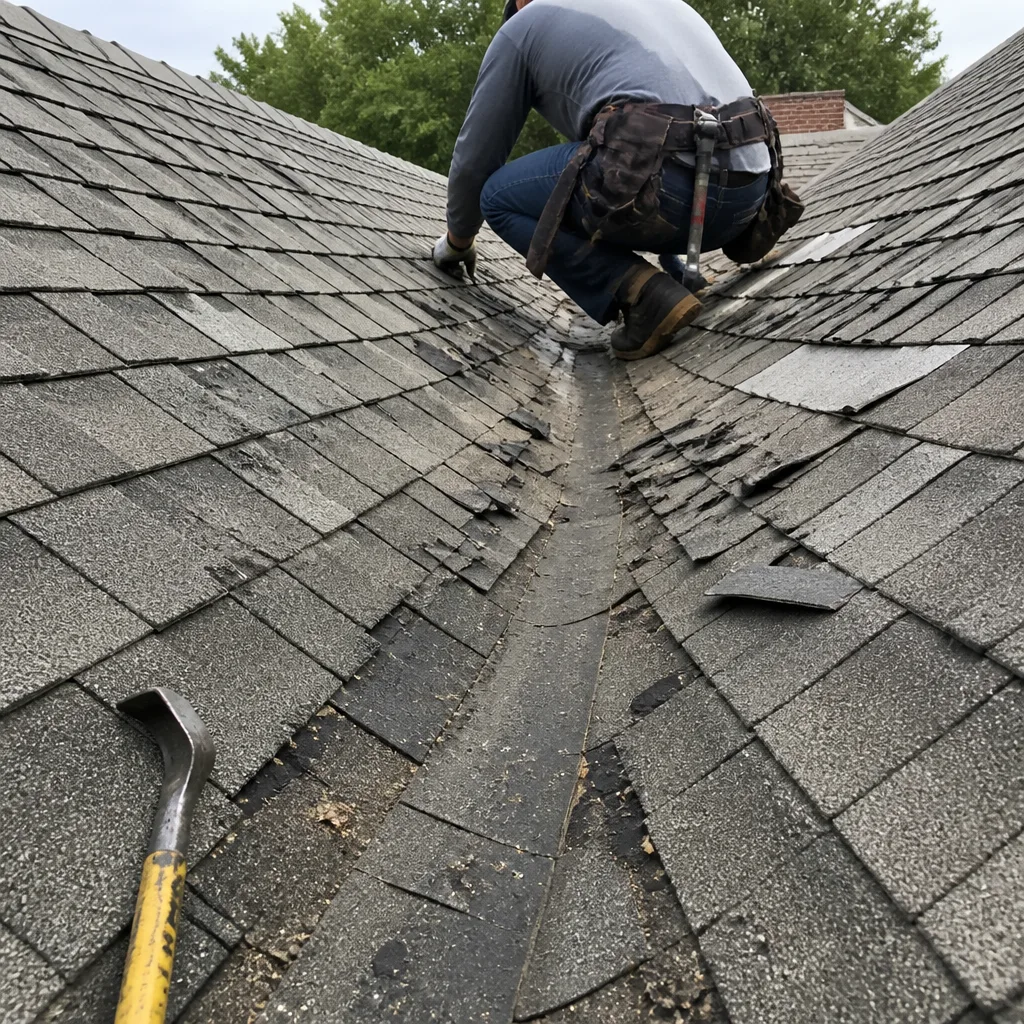 Before
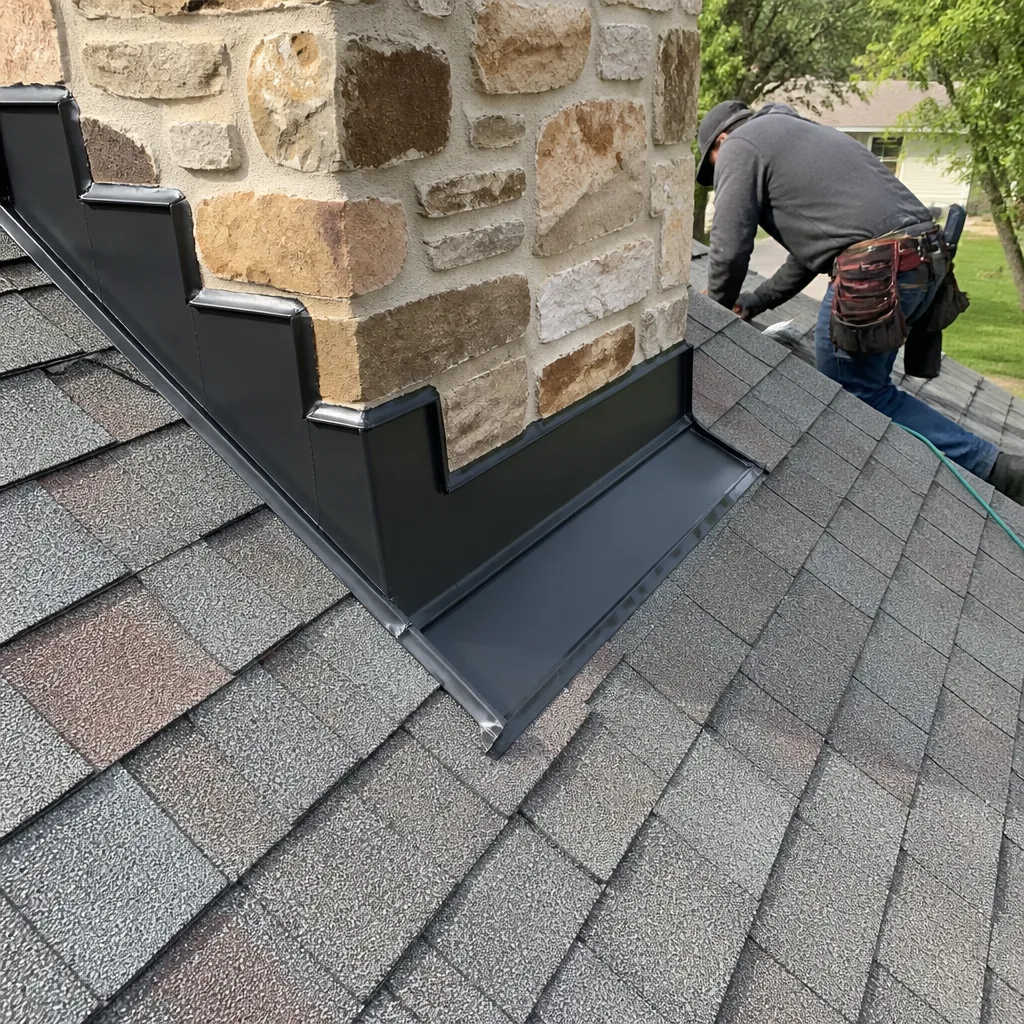 After
AfterLeak Repair in Dallas, TX
A roof leak in Dallas rarely announces itself politely. It starts as a faint water stain on the ceiling, a drip you hear during a downpour, or a musty smell in the attic you can’t place. Then the next storm rolls through and suddenly it’s a problem you can’t ignore. If you’re wondering how much roof repair costs in Dallas, most residential leak fixes typically run between $250 and $650, and the sooner you address the leak, the less expensive the repair tends to be. At Brennan Roofing Co Dallas, we find the actual source of the water and fix it before it becomes a ceiling replacement, a mold problem, or a decking rebuild. Call us at (903) 499-4441 when you first spot trouble; we’ll walk you through what you’re seeing and get a technician out to take a look.
Leak repair is the most common emergency call we handle under our Roof Repair service, and it’s the one homeowners put off the longest. We understand why. A small stain doesn’t feel urgent. But water moves sideways once it gets under the shingles, so the stain you see on the living room ceiling is often nowhere near the actual breach. That’s why our leak repair starts with finding the true entry point, not just sealing the spot where water happened to show up. For a broader look at how we approach roof problems across the city, see our Roof Repair in Dallas page.
When You Need Leak Repair
Some signs of a roof leak are obvious. Others are subtle enough that homeowners dismiss them for months. In Dallas, where spring storms dump rain in short, intense bursts and summer heat bakes roofing materials relentlessly, leaks develop from a particular set of recurring causes. Here’s what we most often see in neighborhoods like Lakewood, Preston Hollow, Oak Cliff, and the M Streets, and what each sign usually means.
- Water stains on ceilings or walls. Brown or yellow discoloration that grows after rain is the classic leak signal. The stain may be small now, but it means water has already saturated the drywall and possibly the insulation above it.
- Dripping you can hear but not locate. If you hear water hitting drywall or dripping inside a wall cavity during storms, you have active water intrusion. It’s often running along a rafter or down a pipe chase before it finds an exit point.
- Missing, cracked, or curling shingles. North Texas wind and hail tear shingles loose. Once the shingle is compromised, the underlayment beneath it starts taking direct water, and underlayment was never designed to be the first line of defense for years on end.
- Granule buildup in gutters or at downspouts. Asphalt shingles shed granules as they age. Heavy granule loss means the shingle surface is degrading, and degraded shingles channel water in ways they shouldn’t.
- Daylight visible through the roof deck in the attic. If you can see light coming through the roof boards, water can absolutely get through the same gaps. This is one of the simplest checks, and it’s one most homeowners never do.
- Musty or humid attic air. Persistent attic moisture after rain points to slow, ongoing leakage, even if nothing has dripped through the ceiling yet. In Dallas’s summer heat, trapped moisture in the attic accelerates decking rot and breeds mold fast.
If you’re seeing any of these, don’t wait for the next storm. Call (903) 499-4441 and describe what you’re seeing. We’ll tell you honestly whether it needs a technician today or whether it can wait a few days.
How Much Does Leak Repair Cost in Dallas?
Most residential leak repairs in Dallas fall between $250 and $650 when the damage is caught early and the repair is straightforward. Larger breaches involving structural repair, significant decking replacement, or extensive flashing work climb from there, typically into the $800 to $1,800 range. What you’ll never get from Brennan Roofing Co Dallas is a number that changes once the work starts. The price goes on paper before any work begins, and that’s the number you pay. That’s not a sales tactic. That’s the Garrison Standard.
What Affects the Price of a Leak Repair
- Location of the leak. A leak near a valley, chimney, skylight, or pipe boot takes more time to properly flash than a simple field shingle replacement. Valleys and penetrations are where roofs actually leak; fixing them correctly means removing and reinstalling materials, not just caulking over the problem.
- Roof pitch and height. Steeper roofs require more safety equipment and slower work. Two-story homes add scaffolding or ladder setup time. These are real labor costs, and we’d rather explain them than bury them.
- Age and condition of the existing roof. An older roof may have brittle shingles that crack when lifted, underlayment that tears, or decking that has already begun to rot. We’ll tell you if the repair is worth doing on its own or if the long-term money is in broader replacement.
- Decking damage. If water has been getting in long enough to rot the roof deck, that section has to be cut out and replaced before new shingles go on. This is the single most common cost surprise in leak repair, and it’s one we flag as soon as we see it.
- Flashing condition. Leaks at chimneys, skylights, vents, and wall intersections almost always involve failed flashing. Replacing flashing properly means bending metal to fit, fastening it correctly, and sealing it so it moves with the roof through Dallas’s temperature swings without pulling loose.
Dallas Leak Repair Price Ranges
- Small, single-area repair: $250 – $400. One penetration, a few shingles, a reseal around a vent or pipe boot, no structural work.
- Moderate repair with flashing: $400 – $650. Chimney, skylight, or valley flashing replacement, some shingle work, minor decking patching.
- Larger repair with structural work: $800 – $1,800. Rotted decking replacement, multiple penetrations, interior water damage mitigation, or repairs on steep or high sections.
- Full roof replacement (when repair no longer makes sense): $9,000 – $18,000+ depending on square footage, pitch, material, and tear-off requirements. We’ll only recommend this when the math is honest and the repair option is genuinely worse for you long-term.
These ranges are specific to the Dallas market, where labor rates, material costs, and the storm-driven frequency of roofing work all shape what you’ll pay. Each house is different, but you shouldn’t have to call just to get a ballpark. If you’re comparing prices, compare the scope of work on the written quote, not just the bottom line. The cheapest leak repair is often the one that doesn’t actually find the leak. Call (903) 499-4441 for a free estimate with a written price before any work starts.
Our Leak Repair Process
Every leak repair we do in Dallas follows the same steps. That’s deliberate. When a process is written down and repeated, nobody skips a step because it’s late in the day or because the roof is hot enough to fry an egg on. Here’s what you’ll watch happen if you call us.
- You call, a live person answers. Not a voicemail tree. You describe what you’re seeing, we ask a few questions, and we schedule a technician. If it’s an active leak during a storm, we’ll talk through temporary steps you can take safely and get someone out as fast as possible. Call (903) 499-4441.
- A background-checked, uniformed technician arrives in the promised window. You’ll know who’s on your property. No subcontractor roulette. The person who shows up works under the Garrison Standard, and the truck, the uniform, and the ID all line up.
- We trace the water to its source. This is the part that separates one roofer from another. Leaks travel. We start at the visible stain and work backward through the attic, the decking, the underlayment, the flashing, and the shingles until we find where water is actually entering. We don’t guess, and we don’t seal a patch and call it done.
- We put the price on paper before any work starts. The written quote covers materials, labor, and what we found. It includes what we’ll do if we open the area and find more damage than expected, because roofs have a way of hiding surprises. You’ll know the number before anything gets removed.
- We do the repair with materials that match your roof. We source from manufacturer lines including Atlas, Tamko, and IKO, so you’re getting a real shingle system, not a mismatched patch that looks like a Band-Aid from the street. We explain what we’re using and why it fits your roof’s age and condition.
- We test, photograph, and walk you through what we found and fixed. After the repair is complete, we run water over the area where practical and verify the fix. You get plain-English documentation of the problem, the work, and the materials. Then it’s covered by the 365-Day Done Right Promise, in writing.
That last step matters more than most homeowners realize. A repair isn’t done when the shingle goes down. It’s done when the next storm passes and nothing drips. That’s why our guarantee is in writing, for one full year, and we come back for free if the repair fails within that period. No fine print, no argument, no charge.
Why Dallas Roofs Leak the Way They Do
Dallas roofs live harder than roofs in most of the country. The math is simple: intense UV exposure in July and August, violent spring storms with hail and high wind, and temperature swings wide enough to make materials flex and pull. Here’s how that shows up in real leak calls we run across the metro.
In Oak Cliff and the older neighborhoods of East Dallas, we regularly see leaks tracing back to original roof penetrations that were flashed decades ago and haven’t been touched since. Metal flashing fatigues. Sealant dries out and cracks. The roof may be fine, but the pipe boot or chimney flashing has quietly failed, and water follows the penetration down into the house. These are often our fastest repairs because the source is usually obvious once we’re on the roof and looking at what time has done.
In newer construction across northern suburbs like Plano, Frisco, and McKinney, we see a different pattern. Builders install roofs fast. When shingles get nailed slightly high or slightly overdriven, they hold for a few years, then the wind finds them. Once one shingle lifts, water works its way to the underlayment, and the shingle replacement need starts small. By the time it shows up on a ceiling, it’s been active long enough to damage the decking. Those are the $800 to $1,800 calls, and they always would have been cheaper if the homeowner had called us six months earlier.
Then there’s hail. Dallas sits in one of the most hail-prone regions in the United States. Hail doesn’t just knock shingles off; it bruises them. A bruised shingle can look fine from the ground while the mat underneath has fractured. Water finds those fractures over time. If you’ve had a hail storm in the last 18 months and you’re seeing water where you never did before, the two are probably connected. We can inspect for hail damage and tell you honestly whether your leak is storm-related, and whether an insurance claim is worth pursuing.
None of these failure modes are mysteries. That’s the frustrating part for homeowners. The right inspection finds them fast. The wrong inspection waits for the ceiling to cave in. We’d rather be the first kind.
What to Do When You Find a Leak (And What Not to Do)
Before you call anyone, there are two things worth doing, and one thing you should absolutely not do. The first useful step is containing the water. Put a bucket under the drip and, if the ceiling is bulging, consider poking a small hole at the lowest point of the bulge so the water drains into the bucket instead of spreading across the drywall. That may sound counterintuitive, but a small drain hole beats a ceiling collapse. The second step is clearing anything valuable out of the way. Water damage to furniture and electronics adds thousands to the total cost of a leak, and insurance doesn’t always cover contents the way you’d hope.
What you should not do is go on a steep or high roof in the rain to try to find the leak yourself. Roofs are slippery when wet, and Dallas storms don’t arrive with warnings polite enough to wait for you to climb down. This is not a safety lecture. It’s a hard truth from someone who has been on more wet roofs than I’d care to count. Let a trained professional with proper safety equipment do the climbing. What you can do safely from the ground or the attic is note exactly where the water is appearing and when, and share that with us when you call.
We also talk honestly with homeowners who want a quick patch caulked over the leak just to get through the next storm. That’s a band-aid, not a repair. We’ll do emergency tarping or temporary sealing when the situation calls for it, but we’ll tell you the truth about how long it will last and what the real fix requires. Most of the time, it’s a couple hundred dollars more to do the permanent repair the same week. Doing it twice costs more in every sense.
Leak Repair Versus Roof Replacement: How We Tell You the Truth
Some leaks are isolated failures. A pipe boot cracks, a section of flashing pulls loose, a few shingles blow off. These are repair calls, full stop. Fix the specific failure point and move on. Our job is to tell you that and not upsell a replacement you don’t need.
Other leaks are symptoms of a roof that has reached the end of its service life. When the shingles are granule-bare across large sections, the flashing is worn thin in multiple locations, and the underlayment has become brittle, patching individual leaks becomes a game of whack-a-mole. You patch one, and the next storm opens another one 10 feet away. In those cases, the honest recommendation is replacement, and we’ll walk you through the numbers side by side: repair now, repair again next year, or replace once and stop thinking about it for 20 years.
That conversation only works if you trust that we’re not steering you toward the bigger invoice because it’s bigger. That trust is exactly why we put the repair option and the replacement option on paper separately with real dollar figures and let you decide. The Garrison Standard doesn’t pay us to sell roofs you don’t need. It pays us to be the roofing company that levels with you, on every job, every time.
Materials We Use on Dallas Leak Repairs
A leak repair lives or dies by the material that goes back on your roof. We source from real manufacturer lines, not whatever is cheapest at the local supply house. On leak repairs, we most often work with Atlas, IKO, and Tamko products because they offer proven shingle systems that match the architectural profiles most common on Dallas homes, and because their underlayment and flashing accessories hold up to North Texas heat in a way generic materials don’t.
Here’s a plain-English breakdown of the roofing components involved in most leak repairs, using the trade words we use on the roof and what each one actually does:
- Flashing: Metal, usually galvanized steel or aluminum, that seals the joints where the roof meets something vertical, like a chimney, a wall, or a skylight. Most leaks are flashing failures, not shingle failures.
- Underlayment: The water-resistant layer between the roof deck and the shingles. It’s the second line of defense, and it’s only as good as the shingles on top of it.
- Decking: The wood sheathing, usually plywood or OSB, that forms the structural surface of the roof. When decking rots, it has to be cut out and replaced. You can’t shingle over rotten wood.
- Drip edge: The metal strip along the roof’s perimeter that directs water into the gutter instead of letting it curl under the shingles at the eaves. A missing or badly installed drip edge causes fascia rot and edge leaks.
- Pipe boot: The rubber or neoprene collar that seals around plumbing vent pipes. These crack with age and sun exposure, and they’re one of the most common leak points we repair in Dallas.
We don’t expect you to become a roofer. But when someone hands you a written quote with a line item that says “reflash chimney,” you should know what that means and why it costs what it costs. We walk through every line with you, because a homeowner who understands the work is a homeowner who never gets taken advantage of.
FAQs – Leak Repair
How quickly can you repair a roof leak in Dallas?
If you call (903) 499-4441 with an active leak, we can typically get a technician to your home the same day or next day, depending on call volume and weather. Emergency tarping can be handled immediately in most cases to stop active water while the permanent repair is scheduled. A live person answers the phone 24/7, so you won’t wait on a callback while water keeps coming in.
Is it cheaper to repair a roof leak or replace the whole roof?
A single isolated leak is almost always cheaper to repair, with most repairs in Dallas running $250 to $650 on the low end and $800 to $1,800 when structural damage or extensive flashing work is involved. Replacement only becomes the cheaper long-term option when the roof is near the end of its life and leaks are recurring across multiple areas. We’ll show you both numbers in writing and let you choose with the facts on the table.
Can a small roof leak wait a few weeks?
Every week a leak stays active, water works deeper into the decking, the insulation, and the drywall. A $350 flashing repair can become a $1,500 decking replacement and a mold remediation bill inside a month, especially during Dallas’s humid summer months. If it’s dripping, don’t wait. Call (903) 499-4441 for an honest assessment of whether it’s urgent or can be scheduled.
Do you guarantee your leak repairs?
Yes. Every leak repair we do in Dallas is covered by the 365-Day Done Right Promise, in writing, for one full year from the date of the repair. If the repair fails within that period, we come back and make it right at no charge. No prorating, no fine print, no arguing about whose fault it was. That’s the whole point of a written guarantee.
What if the leak is in a hard to reach area of the roof?
Our technicians are equipped for steep pitches, two-story homes, and tight access points. The price goes up when safety equipment and slower, more careful work are required, but the repair is handled the same as any other. We do not compromise on safety, and we do not send people onto roofs that are too dangerous to work on during active storms. Call (903) 499-4441 and we’ll tell you what your specific roof requires.
Get Your Leak Fixed Before It Gets Worse
Every day a roof leak stays active in Dallas is a day water is working against you. The fix is usually fast, and the longer you wait, the more expensive and more invasive it becomes. We’re not going to pressure you with countdown timers or fake scarcity. Here’s the straight version: if your roof is leaking, call us now, before the next storm, and you’ll spend less money and lose less sleep than if you wait. If you need roof repair near me in Dallas, a live person answers at (903) 499-4441, 24 hours a day, every day. We’ll schedule an inspection, find the source of the water, and hand you a written price before any work starts. Then we’ll fix it right, and if it fails within a year, we come back free. That’s the deal, in writing, every time. Call (903) 499-4441 to schedule your leak inspection and get a free estimate.
Written by Travis Oakley, Owner at Brennan Roofing Co Dallas, serving Dallas.