
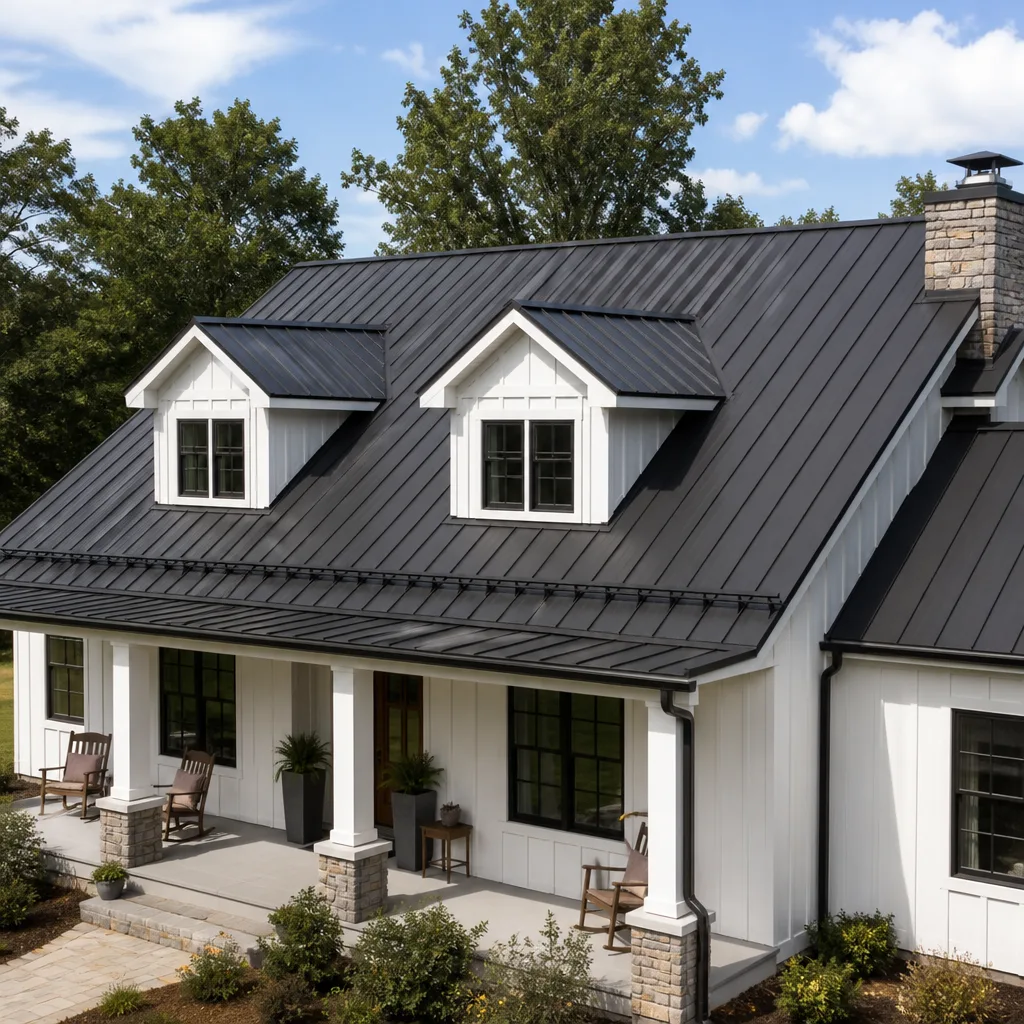
 Metal roofing
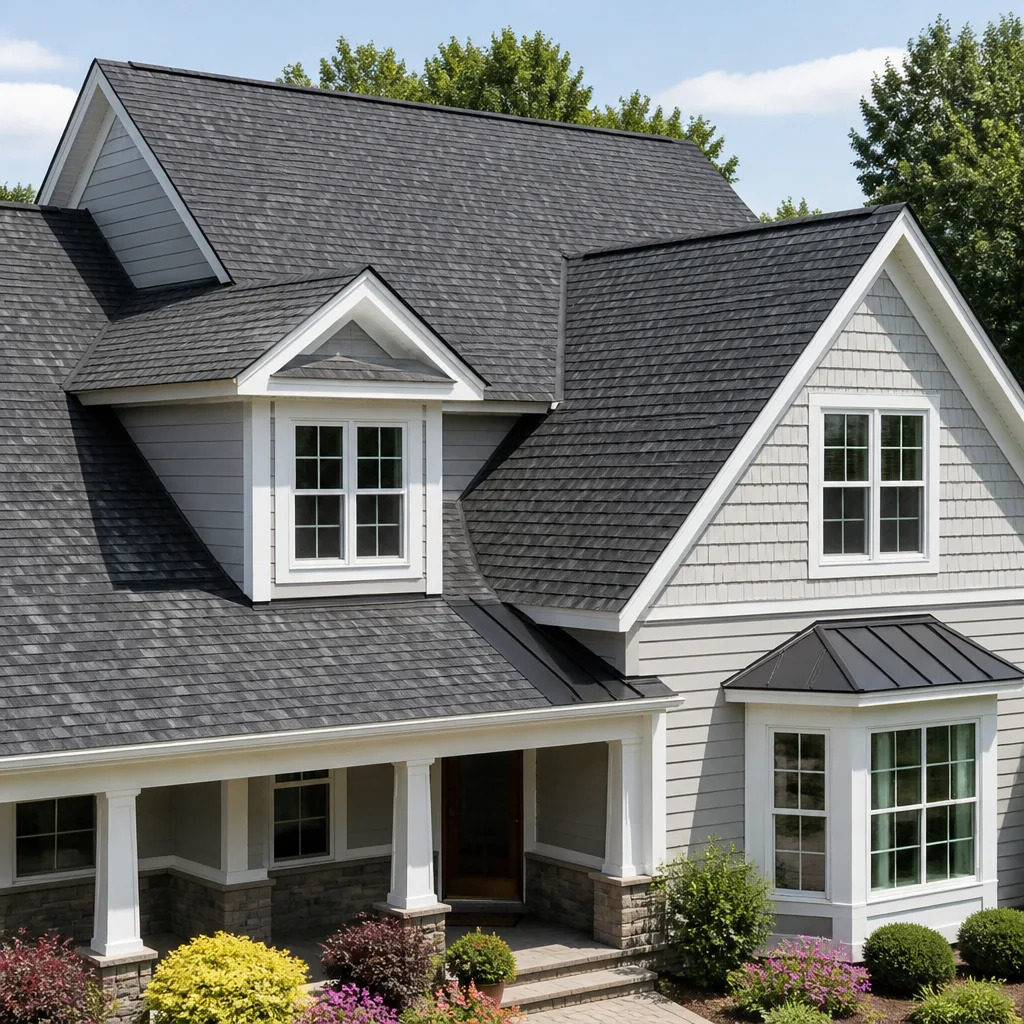 Architectural shingles
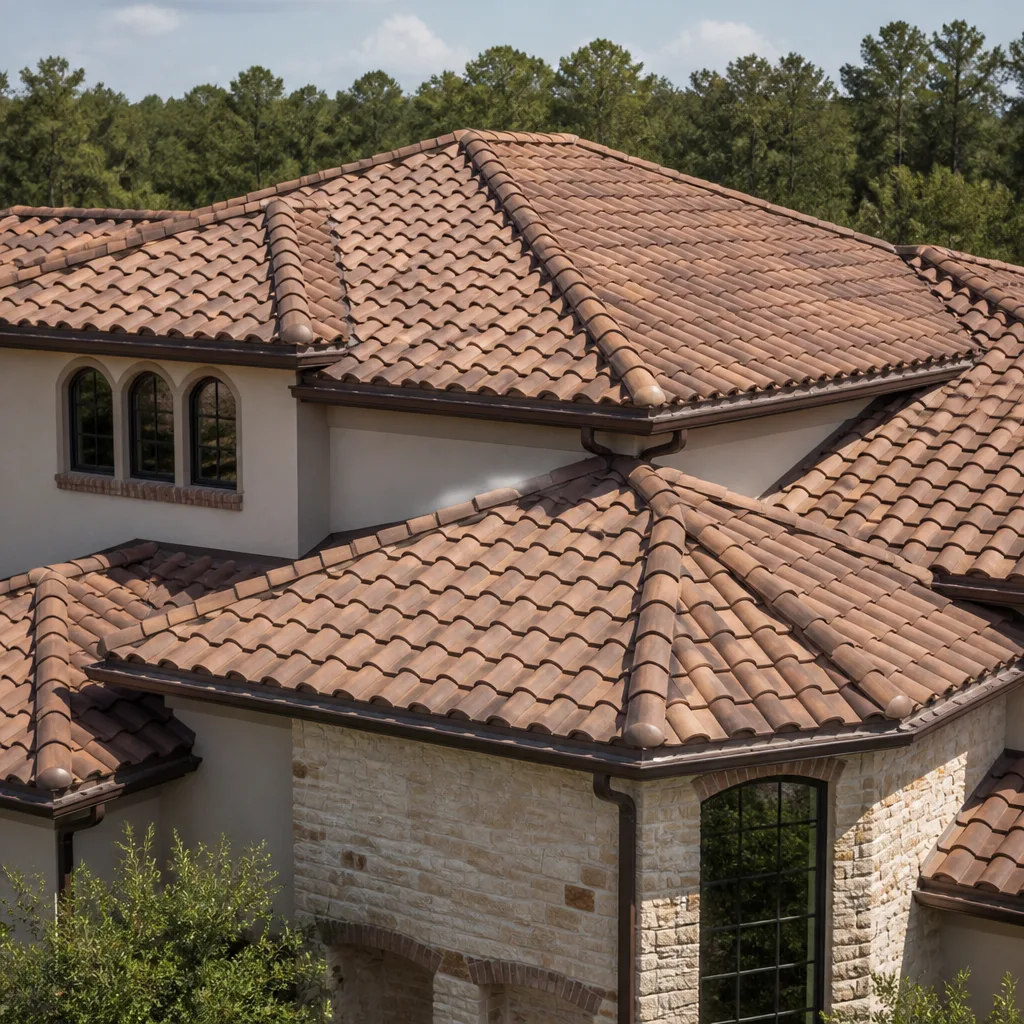 Tile roofing
 GAF
GAF Owens Corning
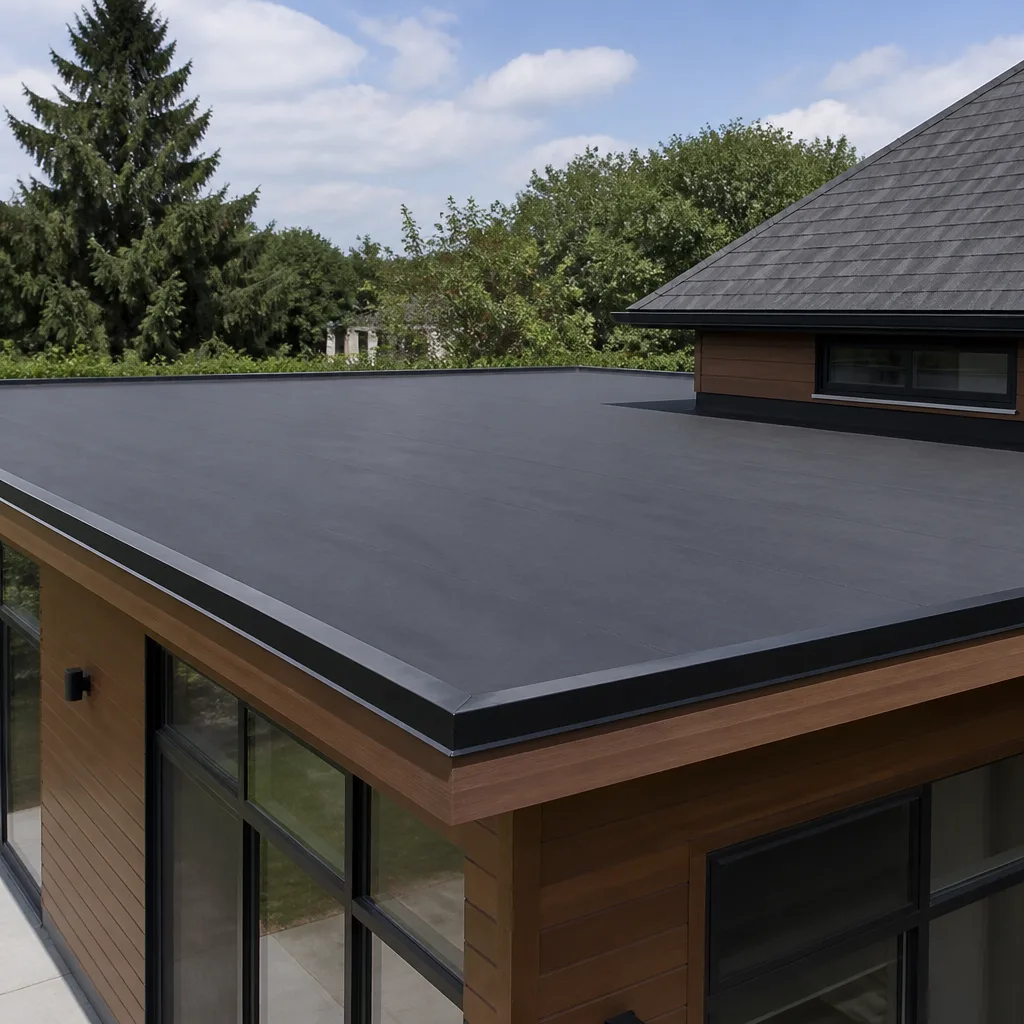 Flat & low-slope
Free roof inspection with deck photos before we talk money - GAF and Owens Corning certified installation
GAF Flashing Replacement: The Dallas Owner’s Guide
GAF flashing replacement in Dallas typically runs $350 to $900 installed, depending on the flashing location, roof pitch, and how much decking or underlayment has to come up. We stock GAF-compatible flashing on our trucks and can usually complete the swap the same day we diagnose it. Most Dallas homeowners discover the problem after a heavy spring storm: water staining on a ceiling, damp insulation in the attic, or granules washing down a gutter from a section of roof that never quite dried out.
Flashing is the metal, rubber, or composite material that seals the joints where your roof changes direction or meets something vertical: chimneys, walls, valleys, vents, and pipe penetrations. When it fails, water gets behind it. A roof either keeps water out or it doesn’t – everything else is just conversation. At Brennan Roofing Co Dallas, we’re an independent roofing company, not a GAF affiliate, and we replace failed GAF flashing with parts matched to your roof’s existing profile.
Which GAF Models This Applies To
GAF flashing isn’t a single universal part. The flashing profile you need depends on the GAF roofing system installed on your house. If you have a GAF Timberline HDZ or Timberline UHDZ architectural shingle system, you’re working with standard residential flashing profiles: step flashing at walls, 4-inch and 5-inch pipe collars, and valley metal that runs 24 to 28 gauge. GAF’s StormGuard and WeatherWatch leak barrier products often pair with these flashing points, which matters because replacement flashing has to integrate cleanly with whatever underlayment is beneath it.
For GAF’s low-slope and commercial lines, like TPO or EverGuard, flashing boots and termination profiles differ from what you’d use on a pitched shingle roof. The compatibility gotcha in Dallas: many homes built in the 1990s and early 2000s used GAF shingles with third-party flashing. If a roofer replaced just the flashing back then with a generic profile, the new GAF-matched flashing we install today won’t seat properly until we address the mismatch at the transition point. The OEM flashing from GAF is higher-gauge material with better paint adhesion than most aftermarket equivalents, but a quality aftermarket part matched to the exact profile works fine, and that’s what we carry on the truck alongside GAF and CertainTeed profiles. Read the part number embossed on the old flashing before you order anything: GAF etches the series code into the metal or molded rubber.
Styles & brands we work with
Signs Your GAF Flashing Replacement Is Failing
- Water staining on ceilings or walls, always in the same corner. Flashing failures leak at a single junction point, so the stain recurs in one spot after every rain. Gravity carries the water along rafters, so the visible stain may be several feet from the actual breach.
- Lifted or curling flashing around chimneys and skylights. Dallas heat cycles expand and contract metal flashing. Over ten to fifteen years, the sealant bond breaks and corners start lifting, which is where wind-driven rain gets in.
- Missing granules and dark streaks where a roof plane meets a wall. Water traveling behind step flashing erodes the shingle surface from underneath. You’ll see darker patches and granule loss at the exact junction before the leak reaches the ceiling.
- Visible rust, pinholes, or cracked rubber boots at pipe penetrations. Rubber pipe boots last roughly 8 to 12 years in North Texas sun. When the rubber splits, it channels water straight down the pipe into the attic. This is the most common flashing failure we see in Dallas and the cheapest to fix if caught early.
- Damp insulation or musty attic air after a storm. If you smell dampness or see darkened insulation near a wall line or chimney chase, the flashing above it has already failed. By this stage, the decking underneath may need repair too.
See the difference
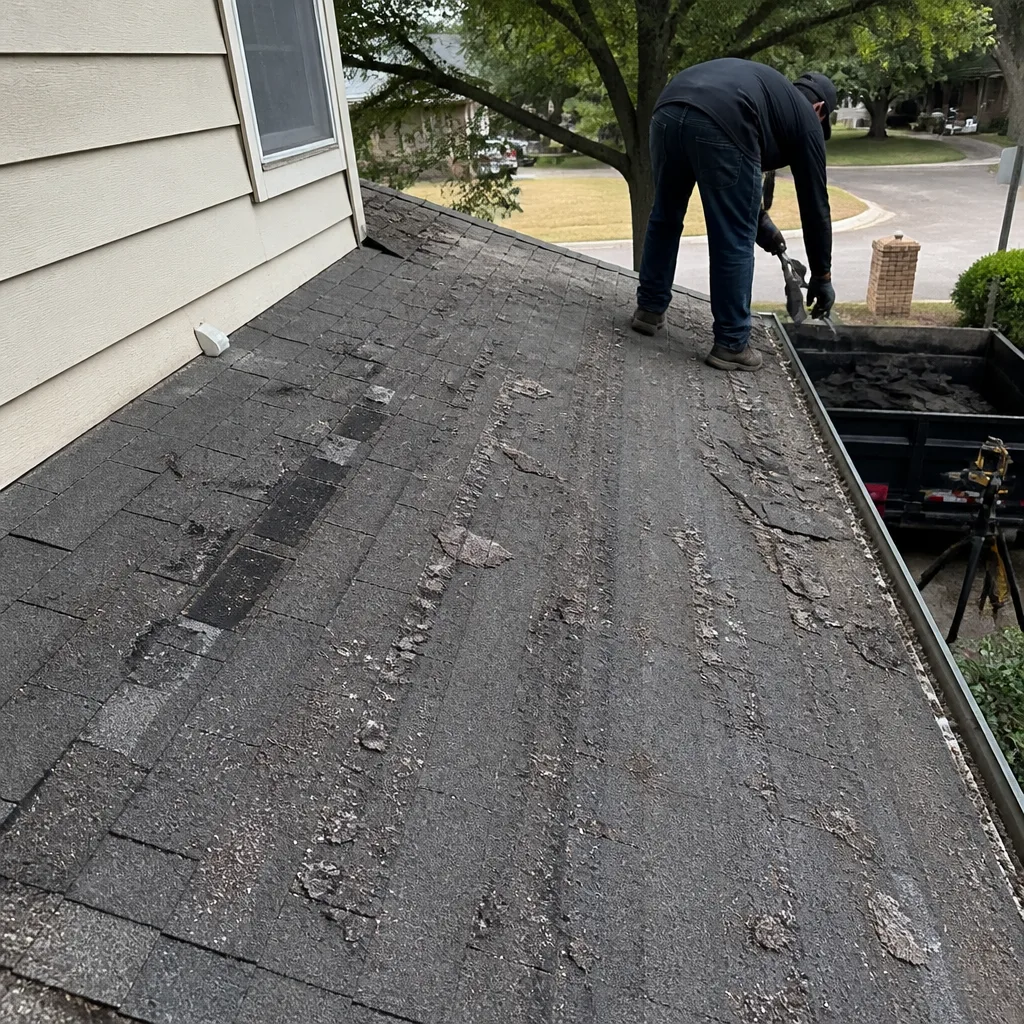 Before
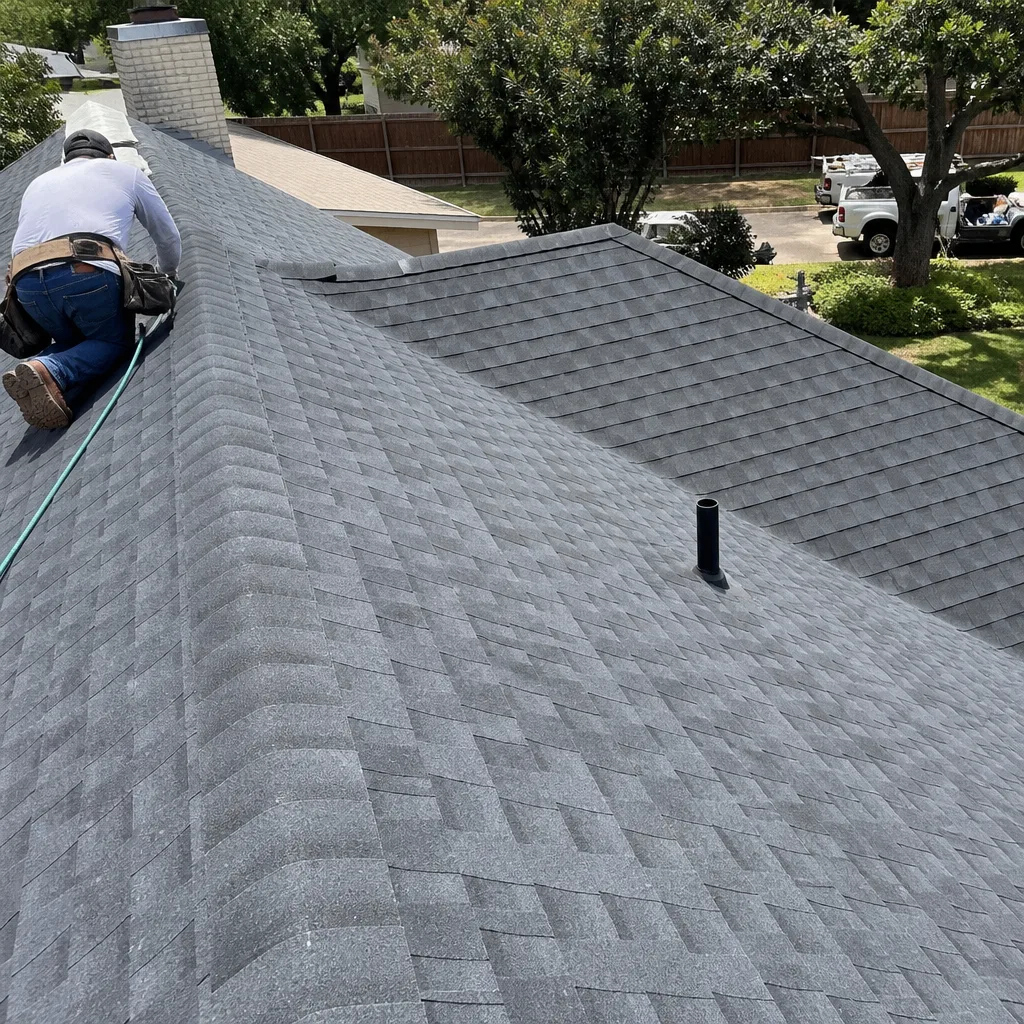 After
After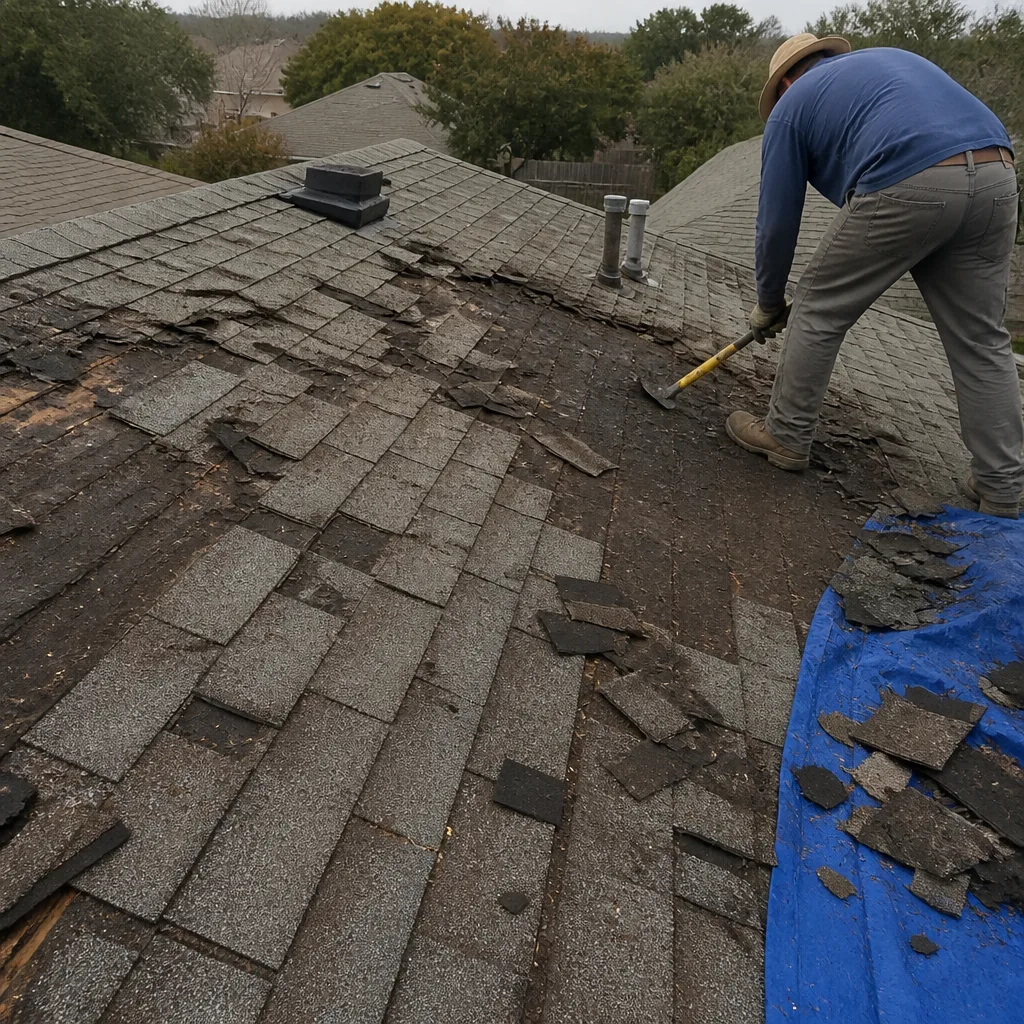 Before
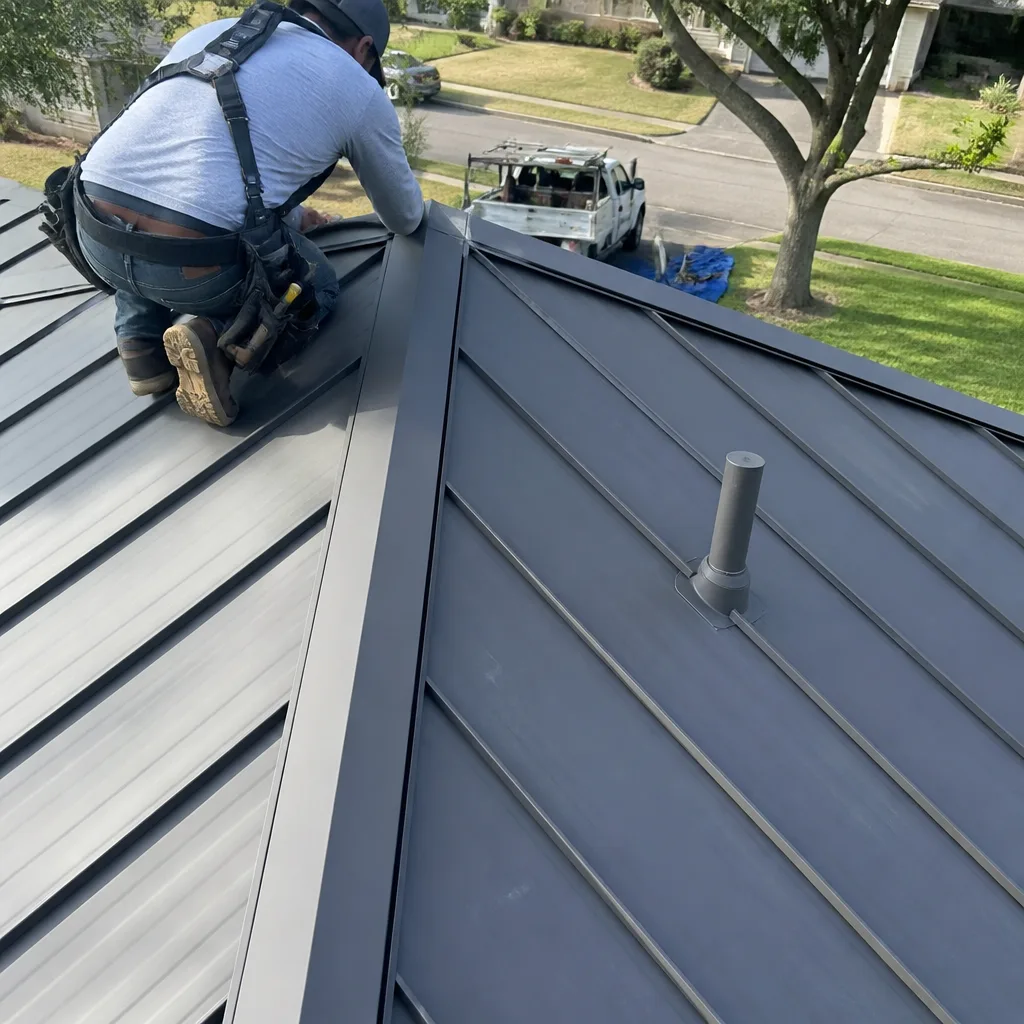 After
After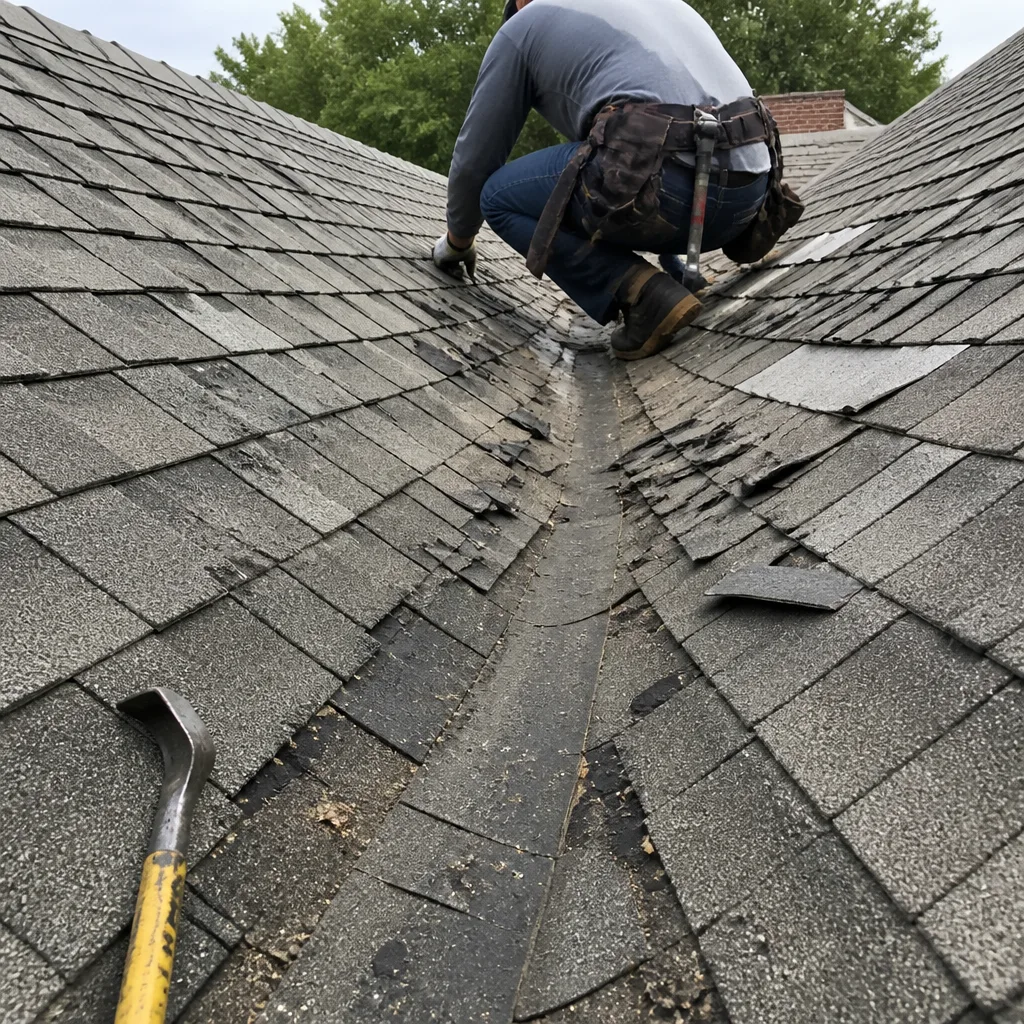 Before
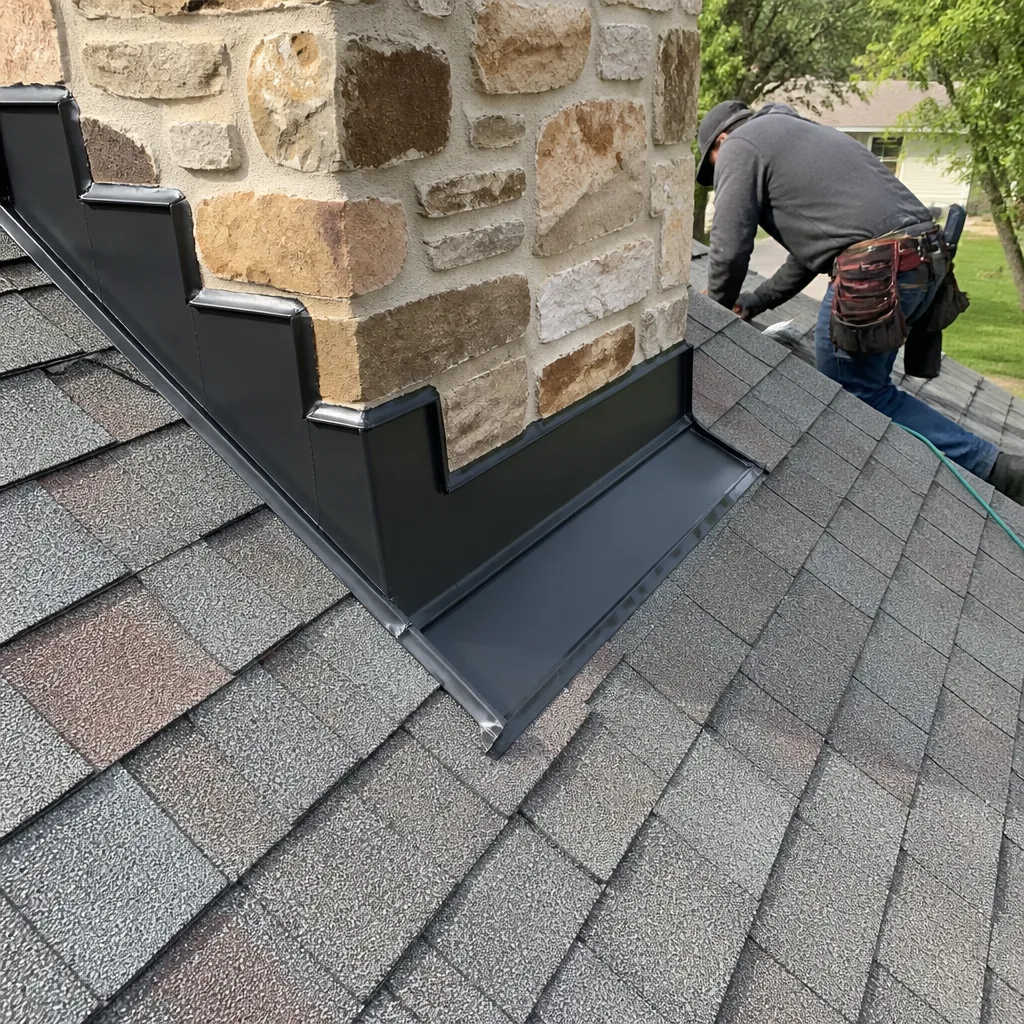 After
AfterReplacement Cost & What’s Included
Installed flashing replacement in Dallas runs $350 to $900 for most single-point repairs. Here’s how that breaks down:
- Pipe boot or vent flashing replacement: $350 – $450. We swap the rubber boot or vent collar, re-seat surrounding shingles, and apply new sealant rated for North Texas UV and heat.
- Step or wall flashing repair (6 – 10 linear feet): $450 – $700. This includes pulling shingles at the wall junction, installing new flashing pieces with proper overlap, and re-nailing the shingles with sealed fasteners.
- Chimney, skylight, or valley flashing replacement: $600 – $900. These jobs involve more flashing material, sometimes new counterflashing cut to fit, and checking the decking underneath for rot.
- Decking repair if the leak has been running: add $90 – $140 per 4×8 sheet of plywood or OSB replaced.
What the price includes: every part, the labor to remove and replace the failed flashing, disposal of the old material, and our 365-Day Done Right Promise in writing. If the repair fails within a year, we come back at no charge. The price you get on paper before any work starts is the price you pay – no added line items when the job’s done. Travis Oakley keeps the bid straight, and that’s not changing here.
DIY or Call Us?
A homeowner can safely do two things. First, from the ground, look for visible rust, lifted metal, or cracked rubber around pipes and walls. Second, after any big storm, check the attic for damp insulation or water trails along rafters. That’s a diagnostic walk, not a repair, and it tells you which part failed.
What you shouldn’t do is get on a roof with a caulk gun and hope. Flashing replacement done wrong looks fine for a month, then leaks worse than before. We see this in Dallas every hailstorm season: sealant layered over split rubber, step flashing nailed through the wrong course, valley metal that wasn’t lapped in the right direction. The repair requires pulling shingles without cracking them, re-nailing to code, and knowing how GAF’s profile seats against the underlayment. If you’re on a ladder at the roofline debating whether to try it, the answer is call us at (903) 499-4441. We’ll give you a written price and a one-year guarantee on the work.
FAQs
Metal flashing on a Dallas roof typically lasts 15 to 25 years, but rubber boots and sealant bonds fail in 8 to 12 years because North Texas heat and UV exposure break down the rubber compounds. Pipe boot flashing is almost always the first flashing component to fail on an otherwise solid GAF roof. Call (903) 499-4441 and we’ll inspect every flashing point on your roof, not just the one that’s leaking.
In most cases, patching failed flashing with sealant is a temporary fix that buys a season, not a solution. The structural issue – split rubber, rusted metal, broken sealant bond – remains under the patch. Replacement flashing costs $350 to $900 installed in Dallas, which is cheaper than repairing the ceiling, insulation, and decking after a patched flashing fails. Call us for an exact quote – estimates are free.
Most single-point flashing replacements, like a pipe boot or a short run of step flashing, take 2 to 4 hours on site. Chimney and valley flashing can take a half day. If the leak has been running long enough to rot the decking, add decking replacement time and material. We’ll give you a written timeline with your written price before the job starts.
Yes. Our trucks carry GAF-compatible flashing profiles in the most common Dallas residential sizes, plus equivalent profiles from Owens Corning and CertainTeed. If your roof has an odd-sized penetration or a commercial GAF profile, we order it and have it within a few days. Live person on the phone at (903) 499-4441 round the clock – call and we’ll tell you what’s on the truck.
Written by Travis Oakley, Owner, Brennan Roofing Co Dallas at Brennan Roofing Co Dallas, serving Dallas and nearby areas.